
Probably the only time I ever agreed with Stanley Crouch. 🙂 His view is now more mainstream among Black thinkers.
Probably the only time I ever agreed with Stanley Crouch. 🙂 His view is now more mainstream among Black thinkers.
The key moment here is at the very end, when Mike is on the run from folks trying to capture him—detain him, constrain him, define him. The smile on his face as he infuriates King Eddie is more than just Bugs Bunnyish cleverness; it’s bliss. (He’s completely in his element here, a combo of Eshu, the Yoruba Trickster God and the mysterious magician from/for the [African] world.) He tries to run away. Seemingly trapped, he then turns into sand, confounding his opponents. The moment works because since it’s Michael Jackson, you think he actually did that. Fifty years of morphing into any shape, every shape. A half-century of re-defining American and world entertainment. Michael showed us that magic wasn’t just possible in fantasy, but actually present, in the world, in us. He continued to produce it, on his own terms, and allowed us to bear witness so we could tell the tale of a man who spent an entire life transforming pain into pleasure.
History was indeed made yesterday. It was the kind of history that Obama likes to make. The President had chosen someone in his own (personal and ideological) image.
If I wasn’t paying attention, I’d think that Obama was the most progressive president I’ve ever seen. And maybe he is. But maybe that’s just not good enough.
The more I turn on the radio, the more disturbed I get. Isn’t anyone going to challenge him on any of this? I think we can both enjoy the history and ask critical questions.

“Star Trek” ? WOW! GOT-D*&N!!!!! And the movie’s great, too! LOL! 🙂

“X-Men Origins: Wolverine” ? Wait for the DVD. The filmmakers just didn’t care enough here, which in the post-“Dark Knight” era, is a sin.

“Doomsday,” “Smallville”‘s Season 8 finale? Powerful—from the little I saw of it. The Big Reveal near the very end was both a tremendous cheat and a great idea! I never thought he would die. 🙂

“Stand,” Tavis Smiley’s first (*snicker*) documentary? I heard him describe this on 89.3 WPFW-FM, and I curled up in a fetal position. If this millionaire’s idea of a documentary is giving him, West, Dyson, et. al. even more airtime, then we’re sunk. Thank God for the white folks at NPR and PBS, who fund real (softish) Black documentaries every once in a while. *SIGH* 😦
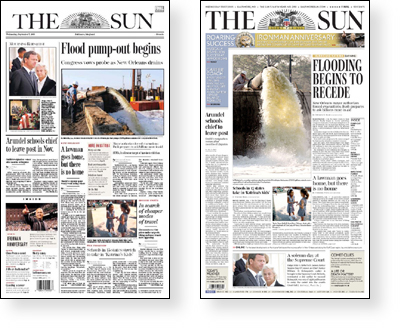
Thank you, David Simon.
Senate Committee on Commerce, Science, and Transportation
Subcommittee on Communications, Technology, and the Internet
Hearing on the Future of Journalism, May 6, 2009Testimony of David Simon (Baltimore Sun, 1982-95, Blown Deadline Productions, 95-09, Baltimore, Md.)
Thank you all for the invitation and opportunity to speak on this issue today, but I start by confessing reluctance.
My name is David Simon and I used to be a newspaperman in Baltimore. Head and heart, I was a newspaperman from the day I signed up at my high school paper until the day, eighteen years later, when I took a buyout from the Baltimore Sun and left for the fleshpots of Hollywood.
To those colleagues who remain at newspapers, I am therefore an apostate, and my direct connection to newspapering –having ended in 1995 – means that as a witness today, my experiences are attenuated.
Ideally, rather than listening to me, you should be hearing from any number of voices of those still laboring in American journalism. I am concerned that the collective voice of the newsroom itself – the wisdom of veteran desk editors, rewrite men and veteran reporters is poorly represented in this process. But of course newspapers are obliged to cover Congress and its works, and therefore the participation of most working journalists in today’s hearing would compromise some careful ethics. I know your staff tried to invite working journalists but were rebuffed on these grounds. And so, tellingly, today’s witness list is heavy with newspaper executives on the one hand, and representatives of the new, internet-based media on the other.
And so, I’ve accepted the invitation, though to be honest, I’m tired of hearing myself on this subject; I’ve had my say in essays that accompany this testimony, and in the episodes of a recent television drama, and I would be more inclined to hear from former colleagues if they were in a position to speak bluntly.
I am glad, at least, to be testifying beside Steve Coll, who labored at the Washington Post for two decades and whose coverage of complex issues upholds the highest journalistic standards. And I will leave to Mr. Coll a more careful and considered analysis of where journalism and newspapering must travel. I fully agree with his fundamental argument that non-profit status is the industry’s last hope, and I believe his thoughts on the subject are more advanced and detailed than my own.
If Mr. Coll can be prescriptive, I will do my best to be diagnostic. I’ll set him up by concentrating on what went wrong in American newspapering.
What I say will likely conflict with what representatives of the newspaper industry will claim for themselves. And I can imagine little agreement with those who speak for new media. From the captains of the newspaper industry, you will hear a certain martyrology – a claim that they were heroically serving democracy to their utmost only to be undone by a cataclysmic shift in technology and the arrival of all things web-based. From those speaking on behalf of new media, weblogs and that which goes twitter, you will be treated to assurances that American journalism has a perfectly fine future online, and that a great democratization in newsgathering is taking place.
In my city, there is a technical term we often administer when claims are plainly contradicted by facts on the ground. We note that the claimant is, for lack of a better term, full of it. Though in Baltimore, of course, we are explicit with our nouns.
High-end journalism is dying in America and unless a new economic model is achieved, it will not be reborn on the web or anywhere else. The internet is a marvelous tool and clearly it is the informational delivery system of our future, but thus far it does not deliver much first-generation reporting. Instead, it leeches that reporting from mainstream news publications, whereupon aggregating websites and bloggers contribute little more than repetition, commentary and froth. Meanwhile, readers acquire news from the aggregators and abandon its point of origin –namely the newspapers themselves.
In short, the parasite is slowly killing the host.It is nice to get stuff for free, of course. And it is nice that more people can have their say in new media. And while some of our internet commentary is – as with any unchallenged and unedited intellectual effort – rampantly ideological, ridiculously inaccurate and occasionally juvenile, some of it is also quite good, even original.
Understand here that I am not making a Luddite argument against the internet and all that it offers. But democratized and independent though they may be, you do not – in my city — run into bloggers or so-called citizen journalists at City Hall, or in the courthouse hallways or at the bars and union halls where police officers gather. You do not see them consistently nurturing and then pressing sources. You do not see them holding institutions accountable on a daily basis.
Why? Because high-end journalism – that which acquires essential information about our government and society in the first place — is a profession; it requires daily, full-time commitment by trained men and women who return to the same beats day in and day out until the best of them know everything with which a given institution is contending. For a relatively brief period in American history – no more than the last fifty years or so – a lot of smart and talented people were paid a living wage and benefits to challenge the unrestrained authority of our institutions and to hold those institutions to task. Modern newspaper reporting was the hardest and in some ways most gratifying job I ever had. I am offended to think that anyone, anywhere believes American institutions as insulated, self-preserving and self-justifying as police departments, school systems, legislatures and chief executives can be held to gathered facts by amateurs pursuing the task without compensation, training, or for that matter, sufficient standing to make public officials even care to whom it is they are lying or from whom they are withholding information.
The idea of this is absurd, yet to read the claims that some new media voices are already making, you would think they need only bulldoze the carcasses of moribund newspapers aside and begin typing. They don’t know what they don’t know – which is a dangerous state for any class of folk — and to those of us who do understand how subtle and complex good reporting can be, their ignorance is as embarrassing as it is seemingly sincere. Indeed, the very phrase citizen journalist strikes my ear as nearly Orwellian. A neighbor who is a good listener and cares about people is a good neighbor; he is not in any sense a citizen social worker. Just as a neighbor with a garden hose and good intentions is not a citizen firefighter. To say so is a heedless insult to trained social workers and firefighters.
So much for new media. But what about old media?
When you hear a newspaper executive claiming that his industry is an essential bulwark of society and that it stands threatened by a new technology that is, as of yet, unready to shoulder the same responsibility, you may be inclined to empathize. And indeed, that much is true enough as it goes.
But when that same newspaper executive then goes on to claim that this predicament has occurred through no fault on the industry’s part, that they have merely been undone by new technologies, feel free to kick out his teeth. At that point, he’s as fraudulent as the most self-aggrandized blogger.
Anyone listening carefully may have noted that I was bought out of my reporting position in 1995. That’s fourteen years ago. That’s well before the internet ever began to seriously threaten any aspect of the industry. That’s well before Craig’s List and department-store consolidation gutted the ad base. Well before any of the current economic conditions applied.
In fact, when newspaper chains began cutting personnel and content, their industry was one of the most profitable yet discovered by Wall Street money. We know now – because bankruptcy has opened the books – that the Baltimore Sun was eliminating its afternoon edition and trimming nearly 100 editors and reporters in an era when the paper was achieving 37 percent profits. In the years before the internet deluge, the men and women who might have made The Sun a more essential vehicle for news and commentary – something so strong that it might have charged for its product online – they were being ushered out the door so that Wall Street could command short-term profits in the extreme.
Such short-sighted arrogance rivals that of Detroit in the 1970s, when automakers – confident that American consumers were mere captives – offered up Chevy Vegas, and Pacers and Gremlins without the slightest worry that mediocrity would be challenged by better-made cars from Germany or Japan.
In short, my industry butchered itself and we did so at the behest of Wall Street and the same unfettered, free-market logic that has proved so disastrous for so many American industries. And the original sin of American newspapering lies, indeed, in going to Wall Street in the first place.
When locally-based, family-owned newspapers like The Sun were consolidated into publicly-owned newspaper chains, an essential dynamic, an essential trust between journalism and the communities served by that journalism was betrayed.
Economically, the disconnect is now obvious. What do newspaper executives in Los Angeles or Chicago care whether or not readers in Baltimore have a better newspaper, especially when you can make more putting out a mediocre paper than a worthy one? The profit margin was all. And so, where family ownership might have been content with 10 or 15 percent profit, the chains demanded double that and more, and the cutting began – long before the threat of new technology was ever sensed.
But editorially? The newspaper chains brought an ugly disconnect to the newsroom, and by extension, to the community as well. A few years after the A.S. Abell Family sold The Sun to the Times-Mirror newspaper chain, fresh editors arrived from out of town to take over the reins of the paper.
They looked upon Baltimore not as essential terrain to be covered with consistency, to be explained in all its complexity year in and year out for readers who had and would live their lives in Baltimore. Why would they? They had arrived from somewhere else, and if they could win a prize or two, they would be moving on to bigger and better opportunities within the chain.So, well before the arrival of the internet, as veteran reporters and homegrown editors took buyouts, newsbeats were dropped and less and less of Baltimore and central Maryland were covered with rigor or complexity.
In a city in which half the adult black males are without consistent work, the poverty and social services beat was abandoned. In a town where the unions were imploding and the working class eviscerated, where the bankruptcy of a huge steel manufacturer meant thousands were losing medical benefits and pensions, there was no longer a labor reporter. And though it is one of the most violent cities in America, the Baltimore courthouse went uncovered for more than a year and the declining quality of criminal casework in the state’s attorney’s office went largely ignored.
Meanwhile, the editors used their manpower to pursue a handful of special projects, Pulitzer-sniffing as one does. The self gratificationof my profession does not come, you see, from covering a city and covering it well, from explaining an increasingly complex and interconnected world to citizens, from holding basic institutions accountable on a daily basis. It comes from someone handing you a plaque and taking your picture.
The prizes meant little, of course, to actual readers. What might have mattered to them, what might have made the Baltimore Sun substantial enough to charge online for content would have been to comprehensively cover its region and the issues of that region, to do so with real insight and sophistication and consistency.
But the reporters required to achieve such were cleanly dispatched, buyout after buyout, from the first staff reduction in 1992 to the latest round last week, in which nearly a third of the remaining newsroom was fired. Where 500 men and women once covered central Maryland, there are now 140. And the money required to make a great newspaper – including, say, the R&D funding that might have anticipated and planned for the internet revolution – all of that went back to Wall Street, to CEO salaries and to big-money investors. The executives and board chairman held up their profit margins and got promoted; they’re all on some golf course in Florida right now, comfortably retired and thinking about things other than journalism. The editors took their prizes and got promoted; they’re probably on what passes for a journalism lecture circuit these days, offering heroic tales of past glory and jeremiads iads about the world they, in fact, helped to bring about.
But the newspapers themselves?
When I was in journalism school in the 1970s, the threat was television and its immediacy. My professors claimed that in order to survive, newspapers were going to have to cede the ambulance chasing and reactive coverage to TV and instead become more like great magazines. Specialization and detailed beat reporting were the future. We were going to have to explain an increasingly complex world in ways that made us essential to an increasingly educated readership. The scope of coverage would have to go deeper, address more of the world not less. Those were our ambitions. Those were my ambitions.
In Baltimore at least, and I imagine in every other American city served by newspaper-chain journalism, those ambitions were not betrayed by the internet. We had trashed them on our own, years before. Incredibly, we did it for naked, short-term profits and a handful of trinkets to hang on the office wall. And now, having made ourselves less essential, less comprehensive and less able to offer a product that people might purchase online, we pretend to an undeserved martyrdom at the hands of new technology.
I don’t know if it isn’t too late already for American newspapering. So much talent has been tom from newsrooms over the last two decades and the ambitions of the craft are now so crude, small-time and stunted that it’s hard to imagine a turnaround. But if there is to be a renewal of the industry a few things are certain and obvious:
First, cutting down trees and printing a daily accounting of the world on paper and delivering it to individual doorsteps is anachronistic. And if that is so, then the industry is going to have to find a way to charge for online content. Yes, I have heard the post-modern rallying cry that information wants to be free. But information isn’t. It costs money to send reporters to London, Fallujah and Capitol Hill, and to send photographers with them, and to keep them there day after day. It costs money to hire the best investigators and writers and then to back them up with the best editors. It costs money to do the finest kind of journalism. And how anyone can believe that the industry can fund that kind of expense by giving its product away online to aggregators and bloggers is a source of endless fascination to me. A freshman marketing major at any community college can tell you that if you don’t have a product for which you can charge people, you don’t actually have a product.
Second, Wall Street and free-market logic, having been a destructive force in journalism over the last few decades, are not now suddenly the answer. Raw, unencumbered capitalism is never the answer when a public trust or public mission is at issue. If the last quarter century has taught us anything – and admittedly, with too many of us, I doubt it has – it’s that free-market capitalism, absent social imperatives and responsible regulatory oversight, can produce durable goods and services, glorious profits, and little of lasting social value. Airlines, manufacturing, banking, real estate –is there a sector of the American economy where laissez-faire theories have not burned the poor, the middle class and the consumer, while bloating the rich and mortgaging the very future of the industry, if not the country itself? I’m pressed to think of one.
Similarly, there can be no serious consideration of public funding for newspapers. High-end journalism can and should bite any hand that tries to feed it, and it should bite a government hand most viciously. Moreover, it is the right of every American to despise his local newspaper – for being too liberal or too conservative, for covering X and not covering Y, for spelling your name wrong when you do something notable and spelling it correctly when you are seen as dishonorable. And it is the birthright of every healthy newspaper to hold itself indifferent to such constant disdain and be nonetheless read by all. Because in the end, despite all flaws, there is no better model for a comprehensive and independent review of society than a modern newspaper. As love-hate relationships go, this is a pretty intricate one. An exchange of public money would pull both sides from their comfort zone and prove unacceptable to all.
But a non-profit model intrigues, especially if that model allows for locally-based ownership and control of news organizations. Anything that government can do in the way of creating non-profit status for newspapers should be seriously pursued. And further, anything that can be done to create financial or tax-based incentives for bankrupt and near-bankrupt newspaper chains to transfer or even donate unprofitable publications to locally-based non-profits should also be considered.
Lastly, I would urge Congress to consider relaxing certain anti-trust prohibitions with regard to the newspaper industry, so that the Washington Post, the New York Times and various other newspapers can sit down and openly discuss protecting their copyright from aggregators and plan an industry wide transition to a paid, online subscriber base. Whatever money comes will prove essential to the task of hiring back some of the talent, commitment, and institutional memory that has been squandered.
Absent this basic and belated acknowledgment that content has value — if indeed it still does after so many destructive buyouts and layoffs – and that content is what ultimately matters, I don’t think anything else can save high-end, professional journalism.
Thank you for your time and again, for your kind invitation.
It’s going WAY too fast for me. My friend Wayne Dawkins explained to me that the Great Recession has turned what was a 10-year transfer away from print into a one-year shift, which is why it’s so painful for so many. I think he’s right.

An important story on important work.

I mean, what else could I add here about American history? About white supremacy and how it manifests itself in mass media?
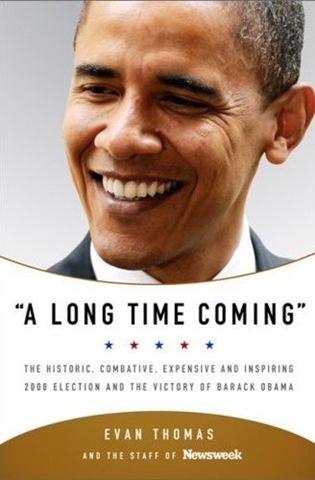
“A Long Time Coming”: The Inspiring, Combative 2008 Election and the Historic Election of Barack Obama.
By Evan Thomas and the staff of Newsweek magazine.
New York: Public Affairs.
256 pp. $22.95.
Rem Rieder, editor and senior vice president of American Journalism Review magazine, was clearly tired of hearing and/or reading for the zillionth time the now-accepted narrative about political journalists and Decision ’08: that Barack Obama’s presidential campaign got a free ride from The Boys (and Girls) On The Bus. “The truth is, the Obama campaign was well-organized, disciplined, virtually error-free. Obama was an inspiring candidate to many, a dazzling public speaker with an inspiring storyline,” Rieder wrote in AJR’s December 2008/January 2009 issue. “The McCain campaign, in contrast, was a train wreck, lurching from message to message. And McCain, who can be an immensely appealing figure, seemed angry and unfocused.”
That’s as good a summary of this book as any. Evan Thomas has crushed Newsweek’s coverage of the two-year rollercoaster into this clear, concise book that allows the reader inside the campaigns’ inner sanctums, due to the magazine’s agreement to not publish the fly-on-the-wall happenings until after Election Day. “Coming,” then, is a very slight outgrowth of the meat of Newsweek’s special post-election issue (which, coincidentally enough, was online until this book’s release).
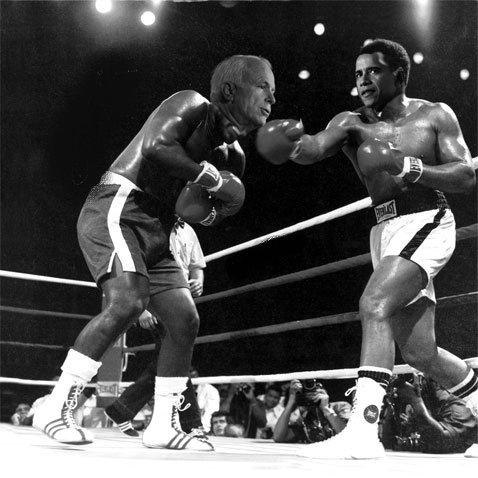
The newsmagazine has had this arrangement with presidential campaigns since 1984, and the trust shows. The publicly displayed hubris and cluelessness of the Hillary Clinton’s would-be nomination crew pales compared with the tone and tenor of its inside fights, and it turns out the McCain-Palin campaign really didn’t know what it was doing from one day to the next. Meanwhile, as the entire world remembers, Barack Obama’s train ran smoothly down America’s track into the White House, The Big Engine That Would. “Coming” answers the how, step by step, day by day.
If you watched the evening news every night last year, this book is just detail. But it’s rich, absorbing and well-written detail, a finely crafted rough draft of history. It rightly belongs on the Obama bookshelf next to Obama’s own “Dreams From My Father” and “The Audacity of Hope” and David Mendell’s very good biography, “Obama: From Promise To Power,” all four now awaiting the scores of tomes to come.
My Fellow Citizens:
I stand here today humbled by the task before us, grateful for the trust you have bestowed, mindful of the sacrifices borne by our ancestors. I thank President Bush for his service to our nation, as well as the generosity and cooperation he has shown throughout this transition.
Forty-four Americans have now taken the presidential oath. The words have been spoken during rising tides of prosperity and the still waters of peace. Yet, every so often the oath is taken amidst gathering clouds and raging storms. At these moments, America has carried on not simply because of the skill or vision of those in high office, but because we the people have remained faithful to the ideals of our forebears, and true to our founding documents.
So it has been. So it must be with this generation of Americans.
That we are in the midst of crisis is now well understood. Our nation is at war, against a far-reaching network of violence and hatred. Our economy is badly weakened, a consequence of greed and irresponsibility on the part of some, but also our collective failure to make hard choices and prepare the nation for a new age. Homes have been lost; jobs shed; businesses shuttered. Our health care is too costly; our schools fail too many; and each day brings further evidence that the ways we use energy strengthen our adversaries and threaten our planet.
These are the indicators of crisis, subject to data and statistics. Less measurable but no less profound is a sapping of confidence across our land — a nagging fear that America’s decline is inevitable, and that the next generation must lower its sights.
Today I say to you that the challenges we face are real. They are serious and they are many. They will not be met easily or in a short span of time. But know this, America — they will be met.
On this day, we gather because we have chosen hope over fear, unity of purpose over conflict and discord.
On this day, we come to proclaim an end to the petty grievances and false promises, the recriminations and worn out dogmas, that for far too long have strangled our politics.
We remain a young nation, but in the words of Scripture, the time has come to set aside childish things. The time has come to reaffirm our enduring spirit; to choose our better history; to carry forward that precious gift, that noble idea, passed on from generation to generation: the God-given promise that all are equal, all are free and all deserve a chance to pursue their full measure of happiness.
In reaffirming the greatness of our nation, we understand that greatness is never a given. It must be earned. Our journey has never been one of shortcuts or settling for less. It has not been the path for the faint-hearted — for those who prefer leisure over work, or seek only the pleasures of riches and fame. Rather, it has been the risk-takers, the doers, the makers of things — some celebrated but more often men and women obscure in their labor, who have carried us up the long, rugged path towards prosperity and freedom.
For us, they packed up their few worldly possessions and traveled across oceans in search of a new life.
For us, they toiled in sweatshops and settled the West; endured the lash of the whip and plowed the hard earth.
For us, they fought and died, in places like Concord and Gettysburg; Normandy and Khe Sanh.
Time and again these men and women struggled and sacrificed and worked till their hands were raw so that we might live a better life. They saw America as bigger than the sum of our individual ambitions; greater than all the differences of birth or wealth or faction.
This is the journey we continue today. We remain the most prosperous, powerful nation on Earth. Our workers are no less productive than when this crisis began. Our minds are no less inventive, our goods and services no less needed than they were last week or last month or last year. Our capacity remains undiminished. But our time of standing pat, of protecting narrow interests and putting off unpleasant decisions — that time has surely passed. Starting today, we must pick ourselves up, dust ourselves off, and begin again the work of remaking America.
For everywhere we look, there is work to be done. The state of the economy calls for action, bold and swift, and we will act — not only to create new jobs, but to lay a new foundation for growth. We will build the roads and bridges, the electric grids and digital lines that feed our commerce and bind us together. We will restore science to its rightful place, and wield technology’s wonders to raise health care’s quality and lower its cost. We will harness the sun and the winds and the soil to fuel our cars and run our factories. And we will transform our schools and colleges and universities to meet the demands of a new age. All this we can do. All this we will do.
Now, there are some who question the scale of our ambitions — who suggest that our system cannot tolerate too many big plans. Their memories are short. For they have forgotten what this country has already done; what free men and women can achieve when imagination is joined to common purpose, and necessity to courage.
What the cynics fail to understand is that the ground has shifted beneath them — that the stale political arguments that have consumed us for so long no longer apply. The question we ask today is not whether our government is too big or too small, but whether it works — whether it helps families find jobs at a decent wage, care they can afford, a retirement that is dignified. Where the answer is yes, we intend to move forward. Where the answer is no, programs will end. Those of us who manage the public’s dollars will be held to account — to spend wisely, reform bad habits, and do our business in the light of day — because only then can we restore the vital trust between a people and their government.
Nor is the question before us whether the market is a force for good or ill. Its power to generate wealth and expand freedom is unmatched, but this crisis has reminded us that without a watchful eye, the market can spin out of control — and that a nation cannot prosper long when it favors only the prosperous. The success of our economy has always depended not just on the size of our gross domestic product, but on the reach of our prosperity; on our ability to extend opportunity to every willing heart — not out of charity, but because it is the surest route to our common good.
As for our common defense, we reject as false the choice between our safety and our ideals. Our founding fathers … our found fathers, faced with perils we can scarcely imagine, drafted a charter to assure the rule of law and the rights of man, a charter expanded by the blood of generations. Those ideals still light the world, and we will not give them up for expedience’s sake. And so to all the other peoples and governments who are watching today, from the grandest capitals to the small village where my father was born: know that America is a friend of each nation and every man, woman, and child who seeks a future of peace and dignity, and that we are ready to lead once more.
Recall that earlier generations faced down fascism and communism not just with missiles and tanks, but with sturdy alliances and enduring convictions. They understood that our power alone cannot protect us, nor does it entitle us to do as we please. Instead, they knew that our power grows through its prudent use; our security emanates from the justness of our cause, the force of our example, the tempering qualities of humility and restraint.
We are the keepers of this legacy. Guided by these principles once more, we can meet those new threats that demand even greater effort — even greater cooperation and understanding between nations. We will begin to responsibly leave Iraq to its people, and forge a hard-earned peace in Afghanistan. With old friends and former foes, we will work tirelessly to lessen the nuclear threat, and roll back the specter of a warming planet. We will not apologize for our way of life, nor will we waver in its defense, and for those who seek to advance their aims by inducing terror and slaughtering innocents, we say to you now that our spirit is stronger and cannot be broken; you cannot outlast us, and we will defeat you.
For we know that our patchwork heritage is a strength, not a weakness. We are a nation of Christians and Muslims, Jews and Hindus — and non-believers. We are shaped by every language and culture, drawn from every end of this Earth; and because we have tasted the bitter swill of civil war and segregation, and emerged from that dark chapter stronger and more united, we cannot help but believe that the old hatreds shall someday pass; that the lines of tribe shall soon dissolve; that as the world grows smaller, our common humanity shall reveal itself; and that America must play its role in ushering in a new era of peace.
To the Muslim world, we seek a new way forward, based on mutual interest and mutual respect. To those leaders around the globe who seek to sow conflict, or blame their society’s ills on the West — know that your people will judge you on what you can build, not what you destroy. To those who cling to power through corruption and deceit and the silencing of dissent, know that you are on the wrong side of history; but that we will extend a hand if you are willing to unclench your fist.
To the people of poor nations, we pledge to work alongside you to make your farms flourish and let clean waters flow; to nourish starved bodies and feed hungry minds. And to those nations like ours that enjoy relative plenty, we say we can no longer afford indifference to the suffering outside our borders; nor can we consume the world’s resources without regard to effect. For the world has changed, and we must change with it.
As we consider the road that unfolds before us, we remember with humble gratitude those brave Americans who, at this very hour, patrol far-off deserts and distant mountains. They have something to tell us, just as the fallen heroes who lie in Arlington whisper through the ages. We honor them not only because they are guardians of our liberty, but because they embody the spirit of service; a willingness to find meaning in something greater than themselves. And yet, at this moment — a moment that will define a generation — it is precisely this spirit that must inhabit us all.
For as much as government can do and must do, it is ultimately the faith and determination of the American people upon which this nation relies. It is the kindness to take in a stranger when the levees break, the selflessness of workers who would rather cut their hours than see a friend lose their job which sees us through our darkest hours. It is the firefighter’s courage to storm a stairway filled with smoke, but also a parent’s willingness to nurture a child, that finally decides our fate.
Our challenges may be new. The instruments with which we meet them may be new. But those values upon which our success depends — hard work and honesty, courage and fair play, tolerance and curiosity, loyalty and patriotism — these things are old. These things are true. They have been the quiet force of progress throughout our history. What is demanded then is a return to these truths. What is required of us now is a new era of responsibility — a recognition, on the part of every American, that we have duties to ourselves, our nation, and the world, duties that we do not grudgingly accept but rather seize gladly, firm in the knowledge that there is nothing so satisfying to the spirit, so defining of our character, than giving our all to a difficult task.
This is the price and the promise of citizenship.
This is the source of our confidence — the knowledge that God calls on us to shape an uncertain destiny.
This is the meaning of our liberty and our creed — why men and women and children of every race and every faith can join in celebration across this magnificent Mall, and why a man whose father less than sixty years ago might not have been served at a local restaurant can now stand before you to take a most sacred oath.
So let us mark this day with remembrance, of who we are and how far we have traveled. In the year of America’s birth, in the coldest of months, a small band of patriots huddled by dying campfires on the shores of an icy river. The capital was abandoned. The enemy was advancing. The snow was stained with blood. At a moment when the outcome of our revolution was most in doubt, the father of our nation ordered these words be read to the people:
“Let it be told to the future world … that in the depth of winter, when nothing but hope and virtue could survive…that the city and the country, alarmed at one common danger, came forth to meet (it).”
America, in the face of our common dangers, in this winter of our hardship, let us remember these timeless words. With hope and virtue, let us brave once more the icy currents, and endure what storms may come. Let it be said by our children’s children that when we were tested we refused to let this journey end, that we did not turn back nor did we falter; and with eyes fixed on the horizon and God’s grace upon us, we carried forth that great gift of freedom and delivered it safely to future generations.
Thank you. God bless you. And God bless the United States of America.

