
Category Archives: film
Fifteen Years Later During Sweeps/Black History Month, CNN Discovers Excesses In HipHop :)
 
The usual CNN simplicity. I’m glad that Zahn was open enough, at least, to include voices like Roland Martin, Chuck D, Michael Eric Dyson, Tim Wise, Keith Boykin, Byron Hurt, etc.
I don’t think it’s nitpicking to say that it would have been better if the author-talking-head roster had included some bonifide hiphop feminists.
It also could have included a comment from Paul Porter (although Roland, to his credit, kept trying to go in that direction), but perhaps that would have cut too close to home. (Perhaps folks like Paul have to write books and/or produce documentaries to get in the national-broadcast guest booker “mix.” Sad reality.)
The show’s online if you missed it—AND WANT TO PAY FOR IT. Hmmm…….. CNN’s not exploiting Blaxploitation during Black History Month, is it? 🙂
A Black Documentary Filmmaker Says "Thanks"
 
Just got this from Akila Worksongs. Did you see it last night? It was on too late for me.
———————-
Dear Supporters of Hip-Hop: Beyond Beats and Rhymes,
Thank you so much for helping to make the national broadcast of Hip-Hop: Beyond Beats and Rhymes such a monumental success last night. Words cannot express my deep gratitude to ALL who watched it on Independent Lens on PBS. The success of the film and its impact on audiences has met my greatest expectations and audacious goals. I know that I could not have accomplished any of these goals without great, brilliant, and talented people on my team. I am humbled by your faith in me and your commitment to my vision.
Let me take a moment to thank God for the courage it took to make this film. I prayed incessantly throughout this project, and God answered my prayers. I must acknowledge that.
I want to send a heartfelt thank you to EVERYONE who supported Hip-Hop: Beyond Beats and Rhymes over the past six years. It’s been a long journey, and I thank you all for coming along for the ride. Thank you to the contributors to the “Friend of a Friend $1 Email Campaign” back in 2000. Your financial support was vital to the launch of this production. Look out for a “Friend of a Friend Email Campaign Part II” in the coming days.
To everyone who granted me an interview for Beyond Beats and Rhymes, thank you so much for your honesty, your bravery, and your intelligence. My only regret is that I could not include everyone I interviewed in the film. To all of the people who made the final cut, thank you, thank you, thank you for being a part of this extraordinary documentary.
Congratulations to Sabrina Schmidt Gordon. You poured your heart and soul into editing this film, and did a masterful job. Your talent and brilliance is evident and shines through in this piece. You have earned the right to make your own film. Go for it, Sabrina!
To Stanley Nelson—you are the man. Thank you for being my executive producer. It is an honor to know you, and to have your ear as my advisor. Your patience, honesty, and commitment to me throughout this endeavor were priceless. To Bill Winters, my director of photography, you are great. Thanks for holding me down and capturing such incredible footage. To my small but powerful production crew, thank you for your dedication, and for helping me get the job done.
To Richard Lapchick, thank you for giving me an opportunity to use my status as an athlete to help create social change. To Jackson Katz, creator and founder of the Mentors in Violence Prevention Program, thank you for radically changing my world view. And to all of the men who are working to redefine masculinity, and are supporting women in the effort to end men’s violence against women, much respect. This is cutting edge, groundbreaking work. Thank you also to the women who have fought for years to be heard and respected, and for showing men the way.
To the gay, lesbian, bisexual, and transgendered community, thank you for teaching me about the complex reality of your daily lives. To gays and lesbians of color who endure both racism and homophobia, continue to show the straight community of color how it all intersects.
To the brilliant folks at NBPC, ITVS, The Ford Foundation, The Corporation for Public Broadcasting, Firelight Media, Independent Lens, and AKILA WORKSONGS Public Relations, I sincerely appreciate your confidence in me, and your support. Thank you to Lisa Davis and the lawyers at Frankfurt, Kurnit, Klein & Selz for vetting my film; to the Center for Social Media, thanks for all of your groundbreaking work around the issue of Fair Use, and for educating me; to Kevin MacRae at Lordly and Dame, thank you for believing in me; to The Media Education Foundation, thanks for your presence in the culture and for creating such powerful media; to Third World Newsreel, thanks for getting me back into the game; to the Black Documentary Collective, I appreciate your support and promise to be more active; to Kounterattack Design, thank you for creativity; to Final Frame Post Production, thanks for the color correction; and thank you, RP Video, for making my dubs.
Also, a special thank you to all of the film festivals, colleges, universities, grassroots, community-based organizations, and high schools across the country that facilitated or sponsored a screening of Hip-Hop: Beyond Beats and Rhymes. Another special thank you to all the journalists and media outlets (print, radio, television, and Internet) that covered the project and wrote smart reviews. It is quite an achievement for a documentary film with a social and political message to get both grassroots and mainstream coverage.
And thanks to all of the people who blogged, forwarded, emailed, or created a buzz through word-of-mouth. We created our own machine! Thanks to all the individuals and friends who sent good vibes for the film’s success.
And finally, a very BIG THANK YOU to my beautiful wife, Kenya, and my family: members of the Hurt-Waller, Hogan and Crumel families… thank you for all of your love and support.
This film project has been a blessing to me and has helped me grow immeasurably – both personally and professionally. I didn’t go through this project, I grew through this project. I have learned ample lessons to apply to my next film.
There are so many people connected to this project, I am certain to have forgotten to mention someone. If I have mistakenly overlooked any person or organization, please forgive me. Just know that if you have contributed to this project in any way, I very much appreciate you.
Lastly, I will make some exciting announcements in the next few days. Please stay tuned to this email address for more information. In the meantime, here’s to realizing a more healthy vision of manhood in the world.
Sincerely,
B. Hurt
Producer/Director, Beyond Beats and Rhymes
God Bless the Child Productions, Inc.bhurt@optonline.net   Â

Did You Hear……….
 
……………”On The Media“‘s recent reports on the image and perspectives of Arabs?

Or Davey D’s account of how the World Social Forum got “hijacked”?
If not, go right ahead. 🙂
A New Film, "The Shape Of Water"
From Kalamu.
——————
“Kum-Kum Bhavnani has made a film about hope and about courage–with women are in the act of creating a more just planet.”
– Susan Sarandon, Academy Award Winner“The world is a place fighting for change. Kum-Kum Bhavnani’s ‘The Shape of Water’ reminds us how to hope.”
– Jeff Zimbalist, Director, “Favela Rising”“There is another globalization at work and that is the globalization of citizens connecting to each other.”
– Vandana Shiva, “The Shape of Water”
Filmed over four years on three continents, THE SHAPE OF WATER (70 minutes, February 2006:) is an inspirational testament to grassroots activism.
SHAPE skilfully interweaves the stories of women such as Khady (Senegal), Oraiza (Brazil), Bilkusben (India), Dona Antonia (Brazil), Gila (Jerusalem) and Vandana Shiva (India) — seeking to end oppressive
social, political, and economic practices in remote corners of the world.
The women are abandoning female genital mutilation, tapping for rubber to protect the rainforest, protecting the biodiversity of the planet and opposing military occupation. THE SHAPE OF WATER offers a unique view of the realities and visions of the women through their passion to create a more just world.
The film works very well in classes that discuss
globalization and development, women’s issues
and struggles, and the daily life of women in Latin America, Africa, Asia and in the Middle East. The film allows the abstract and pervasive issue of globalisation to become comprehensible in human terms, and on a local scale.Class discussion topics could include the various impacts of globalization (on the rainforest, the wisdom of large dams, biodiversity in agricultural practices) and how and why people are moved to make changes in their lives.
I have also used the film to make links between plastic surgery in the US and FGM in other parts of the world.
Narrated by Susan Sarandon, the documentary has already won several awards — Best Feature Documentary (Reel Sisters of the Diaspora, Brooklyn), Best Director, Documentary (San Francisco Women’s Film Festival),
and World Cinema Award (DC Independent Film Festival) amongst others. It has also screened around the United States and in Trinidad, Rome, Barcelona, Durban, Vancouver, the UK and Ankara.THE SHAPE OF WATER is now available for individual and institutional purchase from http://www.theshapeofwatermovie.com/.
If you are interested in knowing more, please do go to the website where you can see a three-minute trailer of the film.Best wishes,
Kum-Kum Bhavnani, Producer/Director
http://www.theshapeofwatermovie.com/

Well, With The SAGs Over With………..
…………I guess Jennifer Hudson should be practicing her Oscar acceptance speech.
Congrats To………..
Jennifer Hudson, Eddie Murphy, Djimon Hounsou, Will Smith and Forest Whitaker!

Well, at least there won’t be all this “making history” talk.
How Many White Reporters Who Didn't Go To Vietnam Got To Be Famous Names Today :)
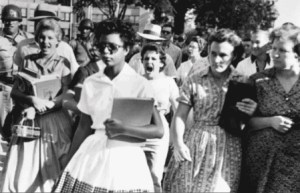
National Public Radio’s “The Diane Rehm Show” had an interesting hour today. I’m glad guest host Susan Page (easily the best Rehm substitute host) brought up the Black press. The discussion would have been much fuller if Page and/or the authors had pointed out the virtually all-white newsrooms that professionally housed these admittedly brave 1960s reporters.
Black People Don't Control Their Culture, Chapter 103
 Â
Â
I guess all of us pundits have one same column we keep writing over and over. :) Enter Minister Paul Scott. I’ve been reading his columns online for at least a couple of years now.
I believe the story of what happened to hiphop is more complex than what he has laid out below. For example, what about the many external and internal factors of Black political and social development between the 1970s and the present that, in many ways, had Black people reject the goals and objectives of the Black Power movement? Regardless of my questions, he has made some good points in this one. And his memory of certain events match mine (which, means, of course, he’s RIGHT :)).
Note: I’m guilty of some editing and fact-correcting here.
————-
The Hip Hop Conspiracy
By TRUTH Minista Paul Scott
With her legacy of slavery and oppression, to say that this country has done some bad things to Black folks is an understatement. We all know about the African Holocaust/Maafa (the slave trade) and the Tuskegee
Experiment as well as other examples of the
mistreatment of Afrikan people by the European. But in a society that has corrupted everything Black to serve its own evil purposes, how could we think that HipHop would be exempt from its evil schemes?We all know the well told story of how when Hip Hop first started in the mid-to-late 1970s, it was about partying. By the late 1980s, the HipHop nation under the leadership of President Chuck D and Secretary of Defense Professor Griff, young Black America was exposed to the teachings of Malcolm X and Huey P. Newton.
We are very familiar with the story of rap’s golden era, as it is known among the cool, HipHop insiders who remember when breaking meant more than someone’s arm being broken in response to a “diss.” And when graffiti on a wall was an easily overlooked misdemeanor, not a felony. And when the color of a  bandana wrapped around somebody’s head wasn’t perceived as a glorified death warrant.
So the million-dollar question becomes: how did the sound of sweet soul music become sour? Or better yet, as Public Enemy asked in the early 90’s: “Who Stole the Soul?”
Let us begin in 1988, when so-called “gangsta” rap began to emerge out of California and how a few young Brothas out of Compton staged a hostile takeover of HipHop.
For a time “Conscious rap” and “Gangsta rap” coexisted in almost perfect harmony, a musical ying and yang, so to speak. When the elders would criticize the lyrics of some to the songs, the conscious rappers would serve as ambassadors of goodwill for the “G’s” and
quickly point out that the rappers were just being attacked because they were young Black men saying something that white society did not want to hear.After all, they were just calling it as they saw it—or, in the vernacular, they were just “keeping it real.” How many times was heard their worn-out Arnold Schwarzenegger excuse, “Well, he can kill 100 people in a movie and nobody says a word, but when we..” Well, they were very right and very wrong. The young rappers underestimated the depths that this society would go to to prevent the “rising of a Black Messiah” or to destroy anything that would serve as a catalyst for social change. As Neely Fuller once said, “If you do not understand white supremacy, everything else will just confuse you.”
In the early-to-mid 90s, the anti-gangsta rap forces in the Black community formed a dangerous alliance with white conservatives that had no love for Black youth from the giddy up. They took the lead on the “gangsta rap
issue” under the guise of “family values.” So the
battle against negative lyrics became an attack on Black youth. Instead of rap that talked about drugs and violence being attacked, all rappers that rapped about anything stronger then “Parents Just Don’t Understand” (remember the debut of Will “Fresh Prince” Smith?) were seen as the
enemy.Since the Black Nationalist community—who could have “attacked” the negative rap but not the rapper, or “love the sinner but hate the sin”—were still banned from the media, the only people that our youth saw preaching against negative lyrics were old preachers
and civil rights crusaders. The media loved promoting the C. Delores Tuckers as poster children of music morality. For over two years the battle raged between the the Hip Hop Nation and The Family Values Nation.
See, the year 1992 changed the game. The LA Rebellion (called by the white media the LA Riots or the Rodney King Verdict Aftermath). Until then, the effect of rap music on the minds of Black youth was still a matter of debate. Could the rebellious words of the rappers actually be manifested in the actions of
Afrikan youth?White America wondered: if we really ticked Black people off, would they really Fight the Power, as rap group Public Enemy urged? In May of 1992, white America’s worst nightmare was realized when thousands of Black people took to the streets, with rap music
supplying the soundtrack. White reporters were shocked when, interviewing “gang members” that they saw that the grassroots could easily articulate the oppression of Afrikan people, both nationally and globally. Rap with a message had to be stopped by any means necessary.When the dust settled the gangsta rappers emerged stronger than ever, the Family Values people emerged with more political clout and the only casualties of war were the “conscious rappers.” Was it a coincidence that the majority of rappers that did not make it through this politically created “Rap Armageddon” unscarred were the “conscious rappers” Sister Souljah, X Clan, Public Enemy, Paris) And the ones that did make it took a 180-degree turn and got smart, finding out that the “gangsta” style was the safer and more lucrative wave of the future (see Ice Cube post-NWA career). So in the end, it was not gangsta rap that destroyed positive rap; it was the anti-rap forces that put the nail in the coffin of pro-Black rap.
So what was left was symbol without substance—or, as The Temptations sang, “a ball of confusion.” All of the energy that was created by X-Clan and Paris had no oulet. Our children knew that they were being attacked but without the guidance of the Black Nationalist community, had no idea who the enemy was.
They became modern day rebels without a cause.The enemy was no longer The Man or his racist, oppressive system; instead, the media promoted the idea that the Black man was the enemy who must be destroyed. We were no longer “Brothers” or “Strong Black men”; we were Niggas—“real” Niggas doing “real” things, like busting a cap in another nigga. Passe was the idea that we were Nubian Kings, protecting our Nubian Queens; naw, Sun, we was now they pimps and they was our Hos.
It seems that the music that we created has become just another tool for the oppression of the Afrikan mind. So that is why today all of the music sounds the same. The music of 2007 sounds the same as the music of 1995. Our youth seem to be all talking, acting and
dressing the same. Why? Because it is easier to control a monolithic people. As Carter G. Woodson once broke down, “When you control a man ‘s thinking you do not have to worry about his actions.” Hip Hop has become White Supremacy’s multi-billion dollar marketing scheme.But all is not lost. A group of some of the strongest Afrikan minds on the planet have gathered to form The Hip Hop Intelligence Project. Our goal: once and for all solve the Hip Hop Conspiracy.
Most people would not place the solving of the Hip Hop Conspiracy in the same category with the questions surrounding the disappearance of Jimmy Hoffa or the assassination of Martin Luther King. But does it matter for those of us Afrikans still in the struggle?
You bet your Timberland boots it does….
For more information on the Hip Hop Intelligence Project, contact Scott at hiphopintel@yahoo.com .


Congrats To………..
…….the “Ugly Betty” folks and the Dream Team!

From EUR……..
Â
EURextra NewsbitsÂ
‘DREAMGIRLS’ IS GOLDEN: Hudson, Murphy and picture itself win ‘Globes’; Whitaker wins too.
If you’ve already seen it, you can’t be surprised at the wins for “Dreamgirls” at last night’s Golden Globes Awards. The acting honors (and congrats) for the flick went out to Eddie Murphy and big screen newcomer Jennifer Hudson.
Â
Murphy took the Golden Globe for Best Supporting Actor and Hudson snagged the statuette for Best Supporting Actress at the 64th annual Golden Globes. The two star in the musical “Dreamgirls.”
Of course we’d be on the late freight if we didn’t acknowledge that “Dreamgirls” itself won the Golden Globe’s Musical or Comedy motion picture category.
Additionally, Forest Whitaker took best actor as Ugandan dictator Idi Amin in “The Last King of Scotland.”
With this win, Murphy has finally received a major film honor after 25 years in the business. The actor had been nominated for a Globe honor three times before. On the other hand, “Dreamgirls” marks Hudson’s film debut.
“I had always dreamed, but I never ever dreamed this big,” former “American Idol” finalist Hudson said. “This goes far beyond anything I could have ever imagined,” said supporting-actress winner Hudson, who dedicated her award to Florence Ballard, one of the singers from the Supremes on which “Dreamgirls” is based.
“Wow. I’ll be damned,” said Murphy, upon accepting his award.
With the Golden Globes considered the runner-up to the Academy Awards, the Oscar buzz is only getting louder for the young starlet.
As Hollywood’s second-biggest film honors, the Globes are something of a dress rehearsal for the Oscars, whose nominations come out Jan. 23. The Oscar ceremony will be on Feb. 25. Nominations for the Oscars closed Saturday, so the outcome of the Globes cannot affect who gets nominated.
The diss of the evening came from Justin Timberlake, who, in accepting the Best Original Song award on behalf of Prince for His Royal Baddness’ “Song of the Heart” from “Happy Feet” (even though Prince himself can be seen sitting in the audience later in the show), bent his knees to speak UP into the microphone, as if to feign being the height of the Minneapolis superstar.Â
For a full list of winners, go here.


 Drums in the Global Village

