Mumia Abu-Jamal 2012 Interview With Russian Television

Listening to this reminds me again how much of life Abu-Jamal has missed.

************

FOR IMMEDIATE RELEASE

Monday, April 9, 2012

Media Contact

AKILA WORKSONGS, Inc.

April R. Silver | pr@akilaworksongs.com

Chantel Bell | chantel@akilaworksongs.com


DANNY GLOVER, FRANCES FOX PIVEN, M1 OF DEAD PREZ AND OTHERS WILL “OCCUPY THE JUSTICE DEPARTMENT”

FOR THE RELEASE OF MUMIA ABU-JAMAL!

Major Protest and Civil Disobedience Planned at the

U.S. Department of Justice: April 24, 2012, 11:00 am, Washington, DC

New York, NY – – A broad coalition of community organizers, activists, artists, students, scholars, celebrities, and concerned individuals will hold a national rally and protest at the headquarters of the US Department of Justice (DOJ) on Tuesday April 24, 2012 at 11:00 am in Washington, DC (located at 950 Pennsylvania Avenue, NW). The purpose of the protest is to call for the release of political prisoner Mumia Abu-Jamal on the day that is his 58th birthday. Renowned activists Frances Fox Piven, and Norman Finkelstein; actor Danny Glover; hip hop artist M-1 (of the duo dead prez); and others will engage in acts of civil disobedience at the protest. Organizers hope that the planned civil disobedience will dramatize their formal request that US Attorney General Eric Holder meet with a delegation to discuss systemic police corruption and civil rights violations in Abu-Jamal’s case and in the cases of hundreds of others across the nation.

Organizers will make seven core demands of US Attorney General Holder:

1.         Release Mumia Abu-Jamal

2.         End mass incarceration and the criminalization of Black and Latino Youth

3.         Create jobs, education, and health care, not jails

4.         End solitary confinement and stop torture

5.         End the racist death penalty

6.         Hands off immigrants

7.         Free all political prisoners

Attorneys will be available to answer questions.

Johanna Fernandez, a professor of history at Baruch College, CUNY in New York and the filmmaker of Justice on Trial: The Case of Mumia Abu-Jamal, announces that the rally and protest are tied to short term and long term goals. “Our immediate goal is to have Mumia Abu-Jamal released from prison. His recent release from death row was only a half victory. Our long- term goal is to end mass incarceration. Toward that end, we have developed a project called Liberation Summer. In just a few months, we will join with others to mobilize, train, and organize thousands of people who want to see an end to the unjust criminalization and mass incarceration of African Americans, Latinos, Muslims, other people of color, immigrants, and poor communities. Mass incarceration is not the solution to social problems. Rather than criminalization, we want a world without prisons.”

Background: Mumia Abu-Jamal

On December 9, 1981 in Philadelphia, journalist Mumia Abu-Jamal was arrested for the killing of a Philadelphia Police Officer Daniel Faulkner. In 1982, he was convicted and sentenced to death row. Last year, the Supreme Court allowed to stand the decisions of four federal judges whose unanimous rulings and arguments state that Abu-Jamal’s 1982 death sentence was unconstitutional. In early December, the Philadelphia District Attorney’s office decided that it would not continue to pursue a death sentence in this case and Abu-Jamal’s original sentence was commuted to life in prison without parole. Supporters of Abu-Jamal have cited the elimination of the death sentence in this case as one of the few civil rights victories in the post-civil rights era. Abu-Jamal’s demand for a new and fair trial and freedom is supported by heads of state from France to South Africa; by city governments from Detroit to San Francisco to Paris; by the Congressional Black Caucus and other members of U.S. Congress; by the European Parliament; by the NAACP, labor unions, and distinguished human rights organizations like Amnesty International; by Nobel Laureates Nelson Mandela, Toni Morrison, and Archbishop Desmond Tutu; by scholars, religious leaders, artists, scientists; and by countless others around the world.

Now that Abu-Jamal is off death row, activists are demanding his release from prison. On December 9, 2011, in an event at the National Constitution Center in Philadelphia that marked the 30th year anniversary of Abu-Jamal’s incarceration, Archbishop Desmond Tutu joined countless others and asked the nation to “rise to the challenge of reconciliation, human rights, and justice” and called for Abu-Jamal’s “immediate release.”

 Background: Why Rally at the Department of Justice?

The police officers who shot, beat, and arrested Mumia Abu-Jamal in 1981 — for the shooting death of Police Officer Daniel Faulkner — were under scrutiny by a Department of Justice investigation of the Philadelphia Police Department. The probe, which began in 1979, marked the first time in the nation’s history that the federal government sued a police department for civil rights violations and charged an entire police department (rather than individual officers, with police brutality). The DOJ suit maintained that the Philadelphia police’s practices of “shooting nonviolent suspects, abusing handcuffed prisoners, suppressing dissension within its ranks, and engaging in a pattern of brutal behavior ‘shocks the conscience.’” (Philip Taubman, “U.S. Files Its Rights Suit Charging Philadelphia Police with Brutality,” The New York Times, August 14, 1979). Only days after the end of Abu-Jamal’s trial and conviction, 15 of the 35 police officers involved in collecting evidence in his case would be convicted and jailed, as a result of this federal investigation, on charges that included graft, corruption, and tampering with evidence to obtain a conviction. Chief among these officers was Alfonzo Giordano, the police inspector who led the crime scene investigation in Abu-Jamal’s case. The DOJ investigation remains unfinished: it did not provide relief for defendants like Abu-Jamal who were convicted by the testimonies and work of these corrupt and convicted cops.

ENDORSED BY: International Concerned Family and Friends of Mumia Abu Jamal ? Educators for Mumia Abu-Jamal ? Coalition to Free Mumia (NYC) ? Occupy Philly ? OCCUPY General Assembly (NYC) ? Occupy DC Now ? Occupy DC Criminal Injustice Committee ? Occupy the Hood ? Decarcerate PA ? Supporting Prisoners and Acting for Radical Change [SPARC] ? Millions for Mumia/Int’l Action Center ? dead prez (Sticman and M1) ? John Carlos ? Talib Kweli ? Immortal Technique ? Angela Davis ? Danny Glover ? Alice Walker ? Francis Pixen ? Amiri Baraka ? Marc Lamont Hill ? Cornell West ? Vijay Prashad ? Norman Finkelstein ? ANSWER Coalition ? Prison Radio

 For event information, contact Johanna Fernandez at 917.930.0804. Media inquiries are directed to AKILA WORKSONGS at 718.756.8501 or pr@akilaworksongs.com .

# # #


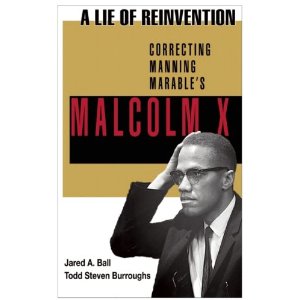
Marable (Posthumously) Wins Pulitzer For "Reinvention"

If it was any other major Black biography, I’d be overjoyed. But nope. I’ll stand by what I’ve said on this, and what I will say.

Columbia professor, 3 alums, including former Spectator editor, win Pulitzers

In addition to the four Columbia affiliates, the Associated Press team that uncovered the NYPD surveillance of Muslim communities received a Pulitzer.

By Naomi Cohen
Spectator Staff Writer

Published April 16, 2012
Updated, 4 a.m.

The late Columbia professor Manning Marable, Eli Sanders, CC ’99, David Kocieniewski, Journalism ’86, and Tracy K. Smith, SoA ’97, were among those awarded Pulitzer Prizes on Monday.

The Associated Press team that uncovered the scope of the New York Police Department’s surveillance of Muslim communities, including college students and the Columbia Muslim Students Association’s website, was one of two award winners for investigative reporting.

The winners were announced in the newly renamed Pulitzer Hall, formerly Journalism Hall, on Columbia’s campus.

Sanders received the award in feature writing for “The Bravest Woman in Seattle,” his narrative of a woman who was raped and whose partner was raped and murdered. Sanders, the editor-in-chief of Spectator’s 122nd managing board in 1998, now writes for The Stranger, an alternative Seattle weekly.

The announcement of Marable’s award for “Malcolm X: A Life of Reinvention” made waves in the Institute for Research in African-American Studies and the Center for Contemporary Black History, which Marable founded.

“In many ways, it was a surprise,” said the institute’s director, Fredrick Harris, who worked closely with Marable. He said the institute exchanged enthusiastic emails regarding the news, which coincides with the planning for a memorial conference for Marable next week, at which leading African-American scholars will speak.

“Here we have an opportunity to reflect on Professor Marable’s scholarship as well as his activism. It highlights the important contributions that Manning Marable made … to Columbia and to the world of scholarship,” Harris said.

The book, which was originally a finalist in the biography category but was awarded the history prize, “separates fact from fiction and casts Malcolm X into a human figure,” Harris said. “It talks about how Malcolm X reinvented himself, and his reinvention of self really reflects on how Black America in the 21st century has to in many ways reinvent himself to address some challenges when it comes to racial inequality.”

Marable died in April 2011 after a double lung transplant and complications from pneumonia. Posthumous Pulitzer awards are rare—the last was awarded in 1996 to the late Jonathan Larson for the musical “Rent.”

One of the two investigative journalism awards was given to Matt Apuzzo, Adam Goldman, Eileen Sullivan, and Chris Hawley at the AP. The national attention resulting from their series inspired a vocal response from students on campus and fireside chats with University President Lee Bollinger and University Chaplain Jewelnel Davis.

“It’s important that they’re [the AP reporters] being recognized for their work,” said Abdul Rafay Hanif, CC ’14 and president of the MSA. “They showed a lot of initiative in reporting the issue and shedding light on the issue that’s not only important to Columbia, or to New York City, but to the entire United States.”

Kocieniewski, a writer for the New York Times, was awarded the prize in explanatory reporting for what the jury called his “lucid series that penetrated a legal thicket” in the tax loopholes often exploited by the affluent.

Smith, a creative writing professor at Princeton, was recognized for her collection of “bold, skillful poems” called “Life on Mars,” which the jury said was capable of “taking readers into the universe and moving them to an authentic mix of joy and pain.”

“It was clear from the very start that Tracy K. Smith’s voice would be a beautiful force to be reckoned with in contemporary American poetry,” said School of the Arts Poetry Director Lucie Brock-Broido, who taught Smith at both Harvard and Columbia. “It is deeply gratifying for us in the School of the Arts to see the body of work that she’s gone on to create and even more gratifying to see that work receive the recognition she so truly deserves.”

Pulitzer Prize Administrator Sig Gissler said, “The watchdog still barks, the watchdog still bites,” referring to the strength of American journalism even “when resources are stretched and newsrooms are thin.”

"Be Your Best Self:" Mumia's Message To His Peeps On Death Row

With Mumia settling (permanently?) into general population, now that his (last?) appeal is gone, I had to post what I got today from International Concerned Family and Friends of Mumia Abu-Jamal, as supporters prepare to “Occupy The Justice Department” on his 58th birthday:

On December 18, 2011, from his solitary cell at SCI Mahanoy, Mumia wrote a message to the men and women with whom he shared death row. We share it with you here: (courtesy of ‘Greater Friends’ the newsletter of Pennsylvania Prison Society)

 *****  

TO MY BRETHREN & SISTAS ON THE ‘ROW
 
It has been barely  a week since I departed Death Row, yet I cannot help but look back, for many of you are in my heart.
I may no longer be on Death Row, but because of you Death Row is still with me. How could that not be so, when I’ve spent more years of my life on Death Row, than in `Freedom?’ Or, more time spent on Death Row, than with my family?
I write to tell you all— even those I’ve never met— that I love you, for we have shared something exceedingly rare. I have shared tears and laughter with you, that the world will neither know nor see. I have shared your anguish when some judge shattered your hopes and spit disappointment; or when some politician sought to use you to climb to higher office.
We have seen time and disease take some of our people off the Row. We have seen several choose their own date to die, cheating the hangman via suicide (William “Billy” Tilley, Jose “June” Pagan). But, Brothers and Sisters of the Row, I write not of death, but of life.
If I can walk off, so can you. Keep rumblin’; keep fightin’; keep rockin’. Check out your Mills issue.
But, there is more. Live each day, each hour, as if it is the only time there is. Love fiercely. Learn a new thing. A language. An art. A science. Keep your mind alive. Keep your heart alive. Laugh!
Look at each other not as competitors, but as fellow travelers on the same red road of life. No matter what the world says of you, see the best in each other, and radiate love to each other.
Be your best self. If you are blessed to have family, send your love to them all—no matter what. If you have a spiritual family or faith, practice it fully and deeply, for this links you to something greater than yourself. No matter what, Christian, Muslim, Judaism, Hindu, Krishna Consciousness, Buddhism, or Santería (or Move). This broadens you and deepens you.
I have been blessed to have many of you as my teachers, and my students. Some have been my sons; some have been my brothers. Yet I see all of you as part of my family.
Take heart, for the death penalty itself is dying. States and counties simply can’t afford it, and politicians who run on it are finding fewer and fewer buyers. Juries (especially in places like Philly) are increasingly reluctant to vote for death, even in cases where it appears imminent.
Sisters on the Row, while we have never met, my heart has felt your tears as you are forcibly separated from your children, unable to hold or kiss them. In many ways, as women, your anguish has been the worst, as your loves and sensitivities are deepest. My words to my brothers are yours as well: keep mind alive. Keep hearts alive. Live. Love. Learn. Laugh!
I know you all as few outsiders do. I’ve met artists, musicians, mathematicians, managers, jailhouse lawyers, and stockbrokers. I’ve seen guys who couldn’t draw a straight line, emerge as master painters (Cush, Young Buck); I’ve seen guys come from near illiteracy to become fluent in foreign languages; I’ve met teachers who’ve created works of surpassing beauty and craftsmanship (Big Tony).
You are all far more than others say of you, for the spark of the infinite glows within each of you. You are on Death Row, but what is finest in you is greater than Death Row.
So, care for each other. Not in words, but in the heart.
Think good vibes on each other.
Lastly, don’t rat. (If ratting was so cool, they would’ve beat me off the Row).
Keep rumblin’, `cause your day is coming.
—Mumia Abu-Jamal, M.A.
Death Row (1983–2011)

Thank You, Mike Wallace

…..for using journalism both to expose injustice and to try to get at the truth.  (I am putting that imfamous racist “watermelons and tacos” crack to the side, but am still putting it here on the record.) As the videos below show, even the product of your ignorance way back when was interesting and helpful.

******

(Stolen from “Today’s WORD on Journalism:”)

Mike Wallace, Super Hero, 1918-2012

“It’s hard to believe, but when Wallace was born in 1918 there wasn’t even a radio in most American homes, much less a TV. As a youth, Wallace said, he was ‘an overachiever. I worked pretty hard. Played a hell of a fiddle.’

“At the University of Michigan, where his parents hoped he’d become a doctor or lawyer, he got hooked instead on radio. And by 1941, Mike was the announcer on ‘The Green Hornet.”” . . .

“It was 65 years from Mike’s first appearance on camera—a World War II film for the Navy—to his last television appearance, a ‘60 Minutes’ interview with Roger Clemens, the baseball star trying to fight off accusations of steroid use.

“65 years!

“It’s strange, but for such a tough guy, Mike’s all-time favorite interview was the one with another legend, pianist Vladimir Horowitz. The two of them, forces of nature both: Sly, manic, egos rampant. For Mike—a red, white and blue kind of guy—Horowitz played ‘The Stars and Stripes Forever.”

“It almost brought tears to the toughest guy on television.

“‘It’s astonishing what you learn and feel and see along the way,’ Wallace said. ‘That’s why a reporter’s job, as you know, is such a joy.’”

—Morley Safer, newsman and longtime Wallace colleague,
“Remembering Mike Wallace, 1918-2012,”
CBS News Sunday, April 5, 2012