
I mean, what else could I add here about American history? About white supremacy and how it manifests itself in mass media?
I mean, what else could I add here about American history? About white supremacy and how it manifests itself in mass media?

Incognegro: A Memoir of Exile & Apartheid.
Frank B. Wilderson, III.
South End Press.
498 pp. $18.

This chronicle of the adventures of Frank Wilderson, III reminds Black Americans that the classic novel and film “The Spook Who Sat By The Door”—where social worker Dan Freeman, the first Black CIA agent, uses his training to turn a street gang into a revolutionary army—wasn’t always metaphor. The author proudly portrays himself as a modern-day Br’er Rabbit-David Walker combo, a trickster character who loves truth so much he’s willing to literally fight for it, regardless of the costs. This beautifully written book documents those struggles for truth, both in South Africa (where he was a member of the armed wing of the African National Congress between the period of Nelson Mandela’s 1990 release from prison and his first years as president) and in America, as a teen in the heyday of late 1960s Berkeley and as a middle-aged Baby Boomer in early 00s-era California academe.
Wilderson is anything but a good Black liberal. A laughable notion, that, since he’d clearly eat one for lunch and spit out the bones. The wickedly great twist of this American Book Award-winning memoir—which went through two book publishers unsuccessfully before landing at South End Press—is that Wilderson was/is a hard-core Leftist revolutionary during an era in which that was/is insanely unpopular on both sides of the Atlantic.


In South Africa, Mandela once called the author, one of the few African-Americans to help lead the ANC, “a threat to national security”—in short, a terrorist. Wilderson was named such because he and his colleagues continued to clandestinely push for socialism by any means necessary while Mandela had embraced the military-corporate establishment and the idea of peace and reconciliation—the latter the author dismisses as “anger management for Blacks.” The hope of a socialist South Africa led by Leftist Chris Hani, Wilderson’s leader (seen with Mandela above), is eventually shot full of holes as Hani‘s blood leaks out. “It was a blind faith I never threatened with scrutiny,“ he said of his time as a South African revolutionary. “I simply incorporated my dream to no longer be the slave of my appearance (the slave of thick lips and guilty eyes; my dream to free my mirror of all contemporary gestures—you’re Black but you’re intelligent, Black but fairly handsome, Black but you come from good….good Black stock?), incorporated it into the dream of a proletarian dictatorship. For five years I kept the faith. But now the world was rushing in again.”
He doesn’t fare much better later, in the land of the free, hope of the slave. The stifling nature of white elite “liberal” universities—and his romantic relationship with a white woman, a fellow professor—brings out his inner Huey Freeman in ways that would make the character’s creator Aaron McGruder chuckle and Michael Eric Dyson and Cornel West quietly step away before their speaking tours get canceled. In one of many serious-but-hilarious episodes, Wilderson laughs at the tension he created in his department after he told his white students he went to South Africa because he wanted to kill a white person, but wanted it to matter politically. At one point, the author asks himself “if Black hatred isn’t a deep well. I drop a stone into it and listen, waiting for the sound when it hits the water. It’s a sound I never hear.”

Simultaneously an honorary Black South African and an honorary American, Wilderson is under the illusion that he is free wherever he goes, which brings all kinds of trouble down on his hard head, and he wouldn’t have it any other way. (As he admits, terms such as delicate and balance “are words I can hardly spell.”) The repeated collision between freedom and voluntary slavery makes a spectacular creative tension that is sustained throughout, deftly sailing the near-500-page tome onto intellectual, personal and socio-political shores occupied by 20th-century writing legends James Baldwin and Eldridge Cleaver and Black Panther living legend Assata Shakur. “I find myself wanting to go home,” he muses at one point, “with no idea where that might be.” His home is with those writers.
Wilderson combines poetry, political travelogue/adventure, diary, radical theory, autobiography, essay, domestic comedy and folklore into organized, relentless time-shifting fragments that explode, shooting up to cut through pre-conceived notions and perceptions carried by those who dare to follow radical autobiography and memoir. “Incognegro” is a clinic for aspiring writers and thinkers. Wilderson’s need to find the larger meanings contained in the glory of (his own) narrative serves him well; he is doing what his former ultra-Leftist ANC comrades, in a lost struggle against Mandela and the ANC’s compromised hegemony, had to eventually do when the music died: “[to] speak his name and mark his moment in history before history came to an end.”
By willing to leap, bloody sword in hand, into contradictions most Black people happily choose to ignore, the author shows a dangerous level of self-awareness and honesty that has led many of his scribe-tribe to madness or deep cynicism. He is saved by his righteous and romantic rage, sarcastic humor and incredible command of the mysterious alchemy of turning word to lyric, past to present and back again, thoughts into actions, and actions into written memories. It’s that latter magic, superbly done here, that is truly revolutionary.

Plunder: Investigating Our Economic Calamity And The Subprime Scandal.
By Danny Schechter.
New York: Cosimo.
240 pp. $14.95.
Danny Schechter is one of my heroes, and I wasn’t afraid to tell him so when I met him. Ever since “South Africa Now” (showing my age here 🙂 ), he’s been a straight-up truth-teller. I used one of his books, “The More You Watch, The Less You Know,” when I was writing my doctoral dissertation.
He continues the tradition here, putting himself in the company of a few journalists who tried to inform America that a serious recession was coming. But, as usual, Schechter is ahead of the mainstream, warning of “a vast CREDIT AND LOAN COMPLEX every bit as insidious as the Military-Industrial Complex. Most Americans have no idea that this even exists.” And you can bet which government it funds.
Schechter blends charts, articles, books, interviews, journalistic observations and even poetry together, walking the reader month by month (almost day by day) through 2007 and 2008 to show it how capitalism unraveled in front of America’s eyes. He explains boldly how it’s actually American democracy that’s threatened by the economic disaster. The journalist-filmmaker-activist-blogger stays in the street and On The Street, and does a very good job of balancing both. Schechter once again earns the reputation he has gained, joining those who proudly stand in the shadow of muckraker legend I.F. Stone.
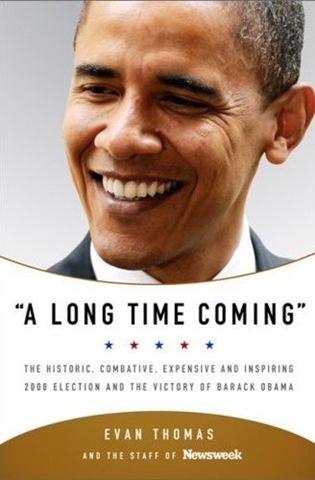
“A Long Time Coming”: The Inspiring, Combative 2008 Election and the Historic Election of Barack Obama.
By Evan Thomas and the staff of Newsweek magazine.
New York: Public Affairs.
256 pp. $22.95.
Rem Rieder, editor and senior vice president of American Journalism Review magazine, was clearly tired of hearing and/or reading for the zillionth time the now-accepted narrative about political journalists and Decision ’08: that Barack Obama’s presidential campaign got a free ride from The Boys (and Girls) On The Bus. “The truth is, the Obama campaign was well-organized, disciplined, virtually error-free. Obama was an inspiring candidate to many, a dazzling public speaker with an inspiring storyline,” Rieder wrote in AJR’s December 2008/January 2009 issue. “The McCain campaign, in contrast, was a train wreck, lurching from message to message. And McCain, who can be an immensely appealing figure, seemed angry and unfocused.”
That’s as good a summary of this book as any. Evan Thomas has crushed Newsweek’s coverage of the two-year rollercoaster into this clear, concise book that allows the reader inside the campaigns’ inner sanctums, due to the magazine’s agreement to not publish the fly-on-the-wall happenings until after Election Day. “Coming,” then, is a very slight outgrowth of the meat of Newsweek’s special post-election issue (which, coincidentally enough, was online until this book’s release).
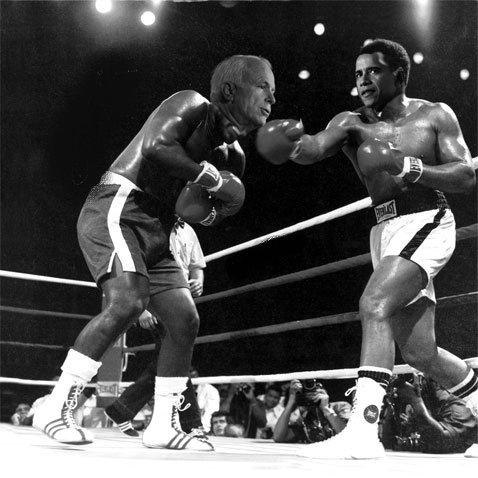
The newsmagazine has had this arrangement with presidential campaigns since 1984, and the trust shows. The publicly displayed hubris and cluelessness of the Hillary Clinton’s would-be nomination crew pales compared with the tone and tenor of its inside fights, and it turns out the McCain-Palin campaign really didn’t know what it was doing from one day to the next. Meanwhile, as the entire world remembers, Barack Obama’s train ran smoothly down America’s track into the White House, The Big Engine That Would. “Coming” answers the how, step by step, day by day.
If you watched the evening news every night last year, this book is just detail. But it’s rich, absorbing and well-written detail, a finely crafted rough draft of history. It rightly belongs on the Obama bookshelf next to Obama’s own “Dreams From My Father” and “The Audacity of Hope” and David Mendell’s very good biography, “Obama: From Promise To Power,” all four now awaiting the scores of tomes to come.
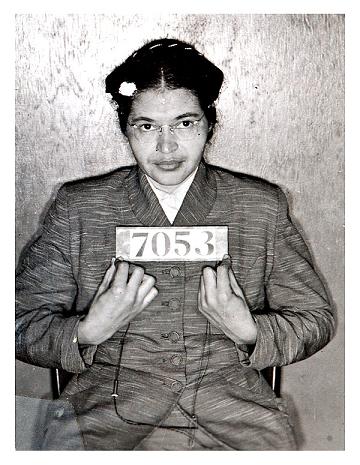
It’s clear this truth can’t be told enough. 🙂
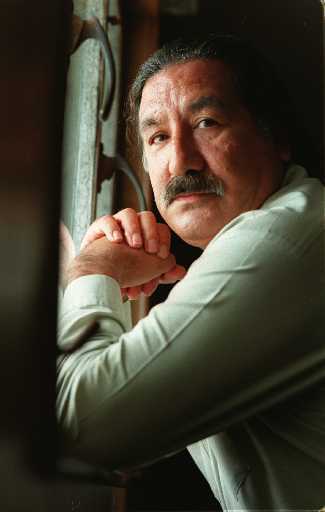
Got this Wednesday morning, after I heard the news on “Democracy Now!”
X-Replyto: contact@whoisleonardpeltier.info
Date: Tue, 20 Jan 2009 17:20:11 -0800 (PST)Dear LP SupportersI am so OUTRAGED! My brother Leonard was severely beaten upon his arrival at the Canaan Federal Penitentiary. When he went into population after his transfer, some inmates assaulted him. The severity of his injuries is that he suffered numerous blows to his head and body, receiving a large bump on his head, possibly a concussion, and numerous bruises. Also, one of his fingers is swollen and discolored and he has pain in his chest and ribcage. There was blood everywhere from his injuries.
We feel that prison authorities at the prompting of the FBI orchestrated this attack and thus, we are greatly concerned about his safety. It may be that the attackers, whom Leonard did not even know, were offered reduced sentences for carrying out this heinous assault. Since Leonard is up for parole soon, this could be a conspiracy to discredit a model prisoner.He was placed in solitary confinement and only given one meal, this is generally done when you won’t name your attackers; incidentally being only given one meal seriously jeopardizes his health because of his diabetes. Prison officials refuse to release any info to the family, but they need to hear from his supporters to protect his safety, as does President Obama. His attorneys are trying to get calls into him now.
This attack on LP comes on the heels of the FBI’s recent letter, prompting this attack by FBI supporters as an attempt to discredit LP as a model prisoner. Anyone who has been in the prison system knows well that if you refuse to name your attackers or file charges against them, then you lose your status as a victim and/or given points against your possible parole and labeled as a perpetrator.
It is not uncommon, in fact is quite common for the government to use Indian against Indian and they still operate under the old adage “it takes an Indian to catch an Indian.” In 1978, they made an attempt to assassinate him through another Indian man who was also at Marion prison with LP. But Standing Deer chose to reveal the plot to him instead of taking his life in exchange FOR A CHANCE AT FREEDOM. When Standing Deer was released in 2001, he joined the former Leonard Peltier Defense Committee as a board member. He also began to speak on Leonard’s behalf until his murder six years ago today. Prior to his murder, Standing Deer confided with close friends and associates that the same man who visited him in Marion to assassinate Peltier, had came to Houston, TX and told him that he had better stay away from Peltier and anything to do with
him.We are aware that currently, the FBI is actively seeking support for his continued imprisonment of Leonard Peltier and also also seeking support from Native People. So please be aware, and keep Leonard in your prayers. The FBI is apparently afraid of the impact we are having. If they will set him up to blemish his record just before a parole hearing, what will they do when it looks like his freedom will become a reality? We need to make sure that nothing happens to him again!
Please write the President, send it priority or registered mail. Email to Change.gov or email President Obama. Call your congressional representatives and write letters, not email, to them. Do what you can to get the word out to insure that LP is receiving adequate medical attention for his injuries.
I am asking you, supporters of Leonard and advocates of justice at this time to help. I don’t know what else to do. Please Help!
Thank you
Betty Peltier-Solano
Executive Coordinator
Leonard Peltier Defense Offense CommitteeAlso call and request Leonard be treated with dignity and respect.
Canaan Federal Prison
570-488-8000
Later, I got a forwarded email that showed a Facebook response:
Date: Wed, 21 Jan 2009 10:02:44 -0800
From: Facebook
Subject: Marpessa Kupendua made a comment about your note…Marpessa made a comment about your note “!*URGENT ALERT: Leonard Peltier Beaten!”:
“Here’s some contact info Jason just sent out:
Let the Bureau of Prisons know that the public will hold them
accountable for the safety and well being of Leonard Peltier.Warden Ronnie R. Holt
USP-Canaan
3057 Easton Turnpike
Waymart, PA 18472
Phone: 570-488-8000
Fax: 570-488-8130
E-mail address: CAA/EXECASSISTANT@BOP.GOVD. Scott Dodrill, Director
Northeast Regional Office
Federal Bureau of Prisons
2nd & Chesnut Streets., 7th Floor
Philadelphia, PA 19106
Phone: 215-521-7301
E-mail: NERO/EXECASSISTANT@BOP.GOVHarley G. Lappin, Director
Bureau of Prisons
U.S. Department of Justice
320 First Street, NW, Room 654
Washington, DC 20534
Phone: 202-307-3250
Fax: 202-514-6878Ask President Obama to investigate this incident:
The Honorable Barack H. Obama
The White House
1600 Pennsylvania Avenue NW
Washington, DC 20500
Comments: 202-456-1111
Switchboard: 202-456-1414
Fax: 202-456-2461
E-mail: http://www.facebook.com/l.php?u=http://www.whitehouse.gov%2Fcontact%2F”To see the comment thread, follow the link below:
http://www.facebook.com/n/?note.php¬e_id=49819416860Thanks,
The Facebook Team
The Last First
not the first heavyweight champion of the world,
airline pilot, quarterback in the NFL, college graduate,
doctor, teacher, big league baseball player, preacher-pastor,
ceo, mountain climber, university president, entrepreneur,
heart surgeon, inventor, governor or poet.not the first mathematician, physicist, engineer, supreme court justice,
fastest man alive, publisher, reporter, ambassador, entertainer,
four-star general, best-selling author, executive chef, sergeant major,
scientist, basketball hall-of-famer, economist, secretary of state,
nobel prize winner, astronaut, law enforcer, chair of the joint chiefs,
senator, first responder or state legislator.not the best trumpet player alive, bank president, husband, father,
organic farmer, rapper’s rapper or coach’s coach.not an ? question looking for an answer or
hidden agenda claiming the authority of one.not an exploiter of the commons.
Is the green hands nurturing fields, crops and rain forests.
is the water, food, education, clean energy, preventive health and intellect required.
is the humanitarian connecting music and economy, writing political notes legible to professionals, novices, students and elders the world over.
is the community organizer maneuvering citizens’ campaigns
expecting to implant knowledge, consent and saneness on impracticabilityas renegade* and renaissance* expand the can in we and yes
at the early-light of this promising century
not the last, is the first
barack obama, president.December 19, 2008
*Secret Service code names for President-Elect Obama and Mrs. Obama
My Fellow Citizens:
I stand here today humbled by the task before us, grateful for the trust you have bestowed, mindful of the sacrifices borne by our ancestors. I thank President Bush for his service to our nation, as well as the generosity and cooperation he has shown throughout this transition.
Forty-four Americans have now taken the presidential oath. The words have been spoken during rising tides of prosperity and the still waters of peace. Yet, every so often the oath is taken amidst gathering clouds and raging storms. At these moments, America has carried on not simply because of the skill or vision of those in high office, but because we the people have remained faithful to the ideals of our forebears, and true to our founding documents.
So it has been. So it must be with this generation of Americans.
That we are in the midst of crisis is now well understood. Our nation is at war, against a far-reaching network of violence and hatred. Our economy is badly weakened, a consequence of greed and irresponsibility on the part of some, but also our collective failure to make hard choices and prepare the nation for a new age. Homes have been lost; jobs shed; businesses shuttered. Our health care is too costly; our schools fail too many; and each day brings further evidence that the ways we use energy strengthen our adversaries and threaten our planet.
These are the indicators of crisis, subject to data and statistics. Less measurable but no less profound is a sapping of confidence across our land — a nagging fear that America’s decline is inevitable, and that the next generation must lower its sights.
Today I say to you that the challenges we face are real. They are serious and they are many. They will not be met easily or in a short span of time. But know this, America — they will be met.
On this day, we gather because we have chosen hope over fear, unity of purpose over conflict and discord.
On this day, we come to proclaim an end to the petty grievances and false promises, the recriminations and worn out dogmas, that for far too long have strangled our politics.
We remain a young nation, but in the words of Scripture, the time has come to set aside childish things. The time has come to reaffirm our enduring spirit; to choose our better history; to carry forward that precious gift, that noble idea, passed on from generation to generation: the God-given promise that all are equal, all are free and all deserve a chance to pursue their full measure of happiness.
In reaffirming the greatness of our nation, we understand that greatness is never a given. It must be earned. Our journey has never been one of shortcuts or settling for less. It has not been the path for the faint-hearted — for those who prefer leisure over work, or seek only the pleasures of riches and fame. Rather, it has been the risk-takers, the doers, the makers of things — some celebrated but more often men and women obscure in their labor, who have carried us up the long, rugged path towards prosperity and freedom.
For us, they packed up their few worldly possessions and traveled across oceans in search of a new life.
For us, they toiled in sweatshops and settled the West; endured the lash of the whip and plowed the hard earth.
For us, they fought and died, in places like Concord and Gettysburg; Normandy and Khe Sanh.
Time and again these men and women struggled and sacrificed and worked till their hands were raw so that we might live a better life. They saw America as bigger than the sum of our individual ambitions; greater than all the differences of birth or wealth or faction.
This is the journey we continue today. We remain the most prosperous, powerful nation on Earth. Our workers are no less productive than when this crisis began. Our minds are no less inventive, our goods and services no less needed than they were last week or last month or last year. Our capacity remains undiminished. But our time of standing pat, of protecting narrow interests and putting off unpleasant decisions — that time has surely passed. Starting today, we must pick ourselves up, dust ourselves off, and begin again the work of remaking America.
For everywhere we look, there is work to be done. The state of the economy calls for action, bold and swift, and we will act — not only to create new jobs, but to lay a new foundation for growth. We will build the roads and bridges, the electric grids and digital lines that feed our commerce and bind us together. We will restore science to its rightful place, and wield technology’s wonders to raise health care’s quality and lower its cost. We will harness the sun and the winds and the soil to fuel our cars and run our factories. And we will transform our schools and colleges and universities to meet the demands of a new age. All this we can do. All this we will do.
Now, there are some who question the scale of our ambitions — who suggest that our system cannot tolerate too many big plans. Their memories are short. For they have forgotten what this country has already done; what free men and women can achieve when imagination is joined to common purpose, and necessity to courage.
What the cynics fail to understand is that the ground has shifted beneath them — that the stale political arguments that have consumed us for so long no longer apply. The question we ask today is not whether our government is too big or too small, but whether it works — whether it helps families find jobs at a decent wage, care they can afford, a retirement that is dignified. Where the answer is yes, we intend to move forward. Where the answer is no, programs will end. Those of us who manage the public’s dollars will be held to account — to spend wisely, reform bad habits, and do our business in the light of day — because only then can we restore the vital trust between a people and their government.
Nor is the question before us whether the market is a force for good or ill. Its power to generate wealth and expand freedom is unmatched, but this crisis has reminded us that without a watchful eye, the market can spin out of control — and that a nation cannot prosper long when it favors only the prosperous. The success of our economy has always depended not just on the size of our gross domestic product, but on the reach of our prosperity; on our ability to extend opportunity to every willing heart — not out of charity, but because it is the surest route to our common good.
As for our common defense, we reject as false the choice between our safety and our ideals. Our founding fathers … our found fathers, faced with perils we can scarcely imagine, drafted a charter to assure the rule of law and the rights of man, a charter expanded by the blood of generations. Those ideals still light the world, and we will not give them up for expedience’s sake. And so to all the other peoples and governments who are watching today, from the grandest capitals to the small village where my father was born: know that America is a friend of each nation and every man, woman, and child who seeks a future of peace and dignity, and that we are ready to lead once more.
Recall that earlier generations faced down fascism and communism not just with missiles and tanks, but with sturdy alliances and enduring convictions. They understood that our power alone cannot protect us, nor does it entitle us to do as we please. Instead, they knew that our power grows through its prudent use; our security emanates from the justness of our cause, the force of our example, the tempering qualities of humility and restraint.
We are the keepers of this legacy. Guided by these principles once more, we can meet those new threats that demand even greater effort — even greater cooperation and understanding between nations. We will begin to responsibly leave Iraq to its people, and forge a hard-earned peace in Afghanistan. With old friends and former foes, we will work tirelessly to lessen the nuclear threat, and roll back the specter of a warming planet. We will not apologize for our way of life, nor will we waver in its defense, and for those who seek to advance their aims by inducing terror and slaughtering innocents, we say to you now that our spirit is stronger and cannot be broken; you cannot outlast us, and we will defeat you.
For we know that our patchwork heritage is a strength, not a weakness. We are a nation of Christians and Muslims, Jews and Hindus — and non-believers. We are shaped by every language and culture, drawn from every end of this Earth; and because we have tasted the bitter swill of civil war and segregation, and emerged from that dark chapter stronger and more united, we cannot help but believe that the old hatreds shall someday pass; that the lines of tribe shall soon dissolve; that as the world grows smaller, our common humanity shall reveal itself; and that America must play its role in ushering in a new era of peace.
To the Muslim world, we seek a new way forward, based on mutual interest and mutual respect. To those leaders around the globe who seek to sow conflict, or blame their society’s ills on the West — know that your people will judge you on what you can build, not what you destroy. To those who cling to power through corruption and deceit and the silencing of dissent, know that you are on the wrong side of history; but that we will extend a hand if you are willing to unclench your fist.
To the people of poor nations, we pledge to work alongside you to make your farms flourish and let clean waters flow; to nourish starved bodies and feed hungry minds. And to those nations like ours that enjoy relative plenty, we say we can no longer afford indifference to the suffering outside our borders; nor can we consume the world’s resources without regard to effect. For the world has changed, and we must change with it.
As we consider the road that unfolds before us, we remember with humble gratitude those brave Americans who, at this very hour, patrol far-off deserts and distant mountains. They have something to tell us, just as the fallen heroes who lie in Arlington whisper through the ages. We honor them not only because they are guardians of our liberty, but because they embody the spirit of service; a willingness to find meaning in something greater than themselves. And yet, at this moment — a moment that will define a generation — it is precisely this spirit that must inhabit us all.
For as much as government can do and must do, it is ultimately the faith and determination of the American people upon which this nation relies. It is the kindness to take in a stranger when the levees break, the selflessness of workers who would rather cut their hours than see a friend lose their job which sees us through our darkest hours. It is the firefighter’s courage to storm a stairway filled with smoke, but also a parent’s willingness to nurture a child, that finally decides our fate.
Our challenges may be new. The instruments with which we meet them may be new. But those values upon which our success depends — hard work and honesty, courage and fair play, tolerance and curiosity, loyalty and patriotism — these things are old. These things are true. They have been the quiet force of progress throughout our history. What is demanded then is a return to these truths. What is required of us now is a new era of responsibility — a recognition, on the part of every American, that we have duties to ourselves, our nation, and the world, duties that we do not grudgingly accept but rather seize gladly, firm in the knowledge that there is nothing so satisfying to the spirit, so defining of our character, than giving our all to a difficult task.
This is the price and the promise of citizenship.
This is the source of our confidence — the knowledge that God calls on us to shape an uncertain destiny.
This is the meaning of our liberty and our creed — why men and women and children of every race and every faith can join in celebration across this magnificent Mall, and why a man whose father less than sixty years ago might not have been served at a local restaurant can now stand before you to take a most sacred oath.
So let us mark this day with remembrance, of who we are and how far we have traveled. In the year of America’s birth, in the coldest of months, a small band of patriots huddled by dying campfires on the shores of an icy river. The capital was abandoned. The enemy was advancing. The snow was stained with blood. At a moment when the outcome of our revolution was most in doubt, the father of our nation ordered these words be read to the people:
“Let it be told to the future world … that in the depth of winter, when nothing but hope and virtue could survive…that the city and the country, alarmed at one common danger, came forth to meet (it).”
America, in the face of our common dangers, in this winter of our hardship, let us remember these timeless words. With hope and virtue, let us brave once more the icy currents, and endure what storms may come. Let it be said by our children’s children that when we were tested we refused to let this journey end, that we did not turn back nor did we falter; and with eyes fixed on the horizon and God’s grace upon us, we carried forth that great gift of freedom and delivered it safely to future generations.
Thank you. God bless you. And God bless the United States of America.

 Drums in the Global Village