The Last Word On……….

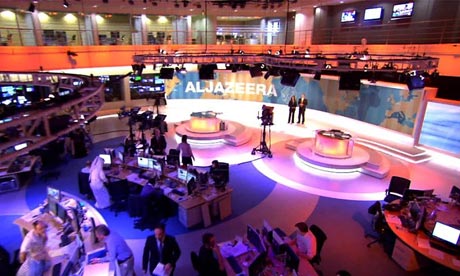
……the GREATNESS of Al Jazeera English.  Nothing more needs to be said.

******************************************

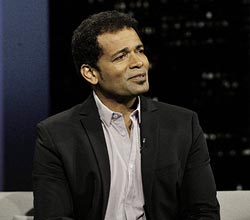
……TV One’s recent airing of a serious documentary on Black men. Congrats and Kudos to Mario!

**************************************************

The next Superman? Hmmm……….

*****************************************************

I liked the first half hour of the one I heard—the second one.  Public radio often lurches SLOWLY to a real examination of Black life in America.

*************************************************

A REAL-LIFE Batmobile, like in “Batman Returns” and “The Dark Knight?” WOW!

************************************************

……..the death of Wizard as a print publication. Yes, long time coming, but still……I hope the new venture will have as many (as in the same) employees, but I doubt it.

********************************************************

I really don’t know what to do with this.  (My nephew kept telling me about this incident.)  I saw other (and whiter) real-life superheroes in the last issue of Wizard. I liked “Kick Ass” a lot—AS A MOVIE.

Asante Sana, Dr. Erwin Ponder

Doku. (“The father died.”) Sometimes when you speak, you hear an echo of all those who told you it before. Sometimes when you listen, you can hear drums. Sometimes when you put on an outfit—a disguise, really—you remember all the roles that had been played by those actors before you joined the scene.

For too many people, history begins when they begin paying attention. In many ways, history began for me when I met several individuals between 14 and 17. One of them was Erwin Ponder.  He became one of my surrogate fathers. Out of all of them, he was the most unusual.

Babafemi. (“Father loves me.”) He was always busy. I didn’t care; being lonely and hungry for information, I took all the time he had, and then some. You had to pay attention to what he was saying, because he could be making a joke, a gentle one at your expense. But he was much more serious than he let on. He knew much more than he let on—about history, and the Bible, the Nation of Islam, and the Qur’an. He would tell me things that I would take years, and several degrees, to understand. I was amazed to read about his youth in Newark in that Geraldo Rivera book, “Special Kind of Courage.” Did he ever show you that? Did he ever tell you he could draw? It took years for him to let those things slip out.

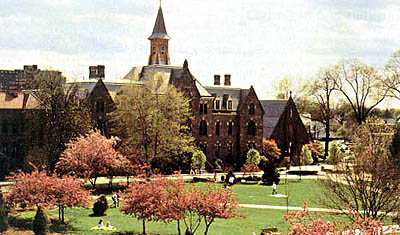
As I got older, he got more unusual. While I was in college, he would be an Upward Bound administrator in the morning and then be serving dinner as part of the University’s food serving staff in the afternoon! Before going to his third job, running a video store! In between all of that, he was a Q, a Mason, a Gospel choir manager, and who-knows-what-else! I’m sure he never told you this, but somehow he found time to spend half my senior year making sure I didn’t flunk out of Seton Hall. And I sure tried.

He seemed to never get credit for all of this. Not even from me! He told me that the only responsibility I had to him was to pass on the information to the next generation.

Asante Sana, Babatunde. (“Thank you, Father Who Has Returned!”) I decided a long time ago that I was going to be unusual, and I still am. And I will pass along the information, hearing echoes and drums and his voice from the Realm of the Ancestors and, hopefully, seeing possibilities.
Okay, With “Narnia” and “Tron” Finally Out Of The Way…….

………THIS is the movie I’m waiting for, anxiously. The GREATEST Superman story EVER. And if you have a lot of time and have read a lot of books, you can check this looonnnggg interview out, because it’s just that significant!

FEBRUARY 17th UPDATE: Enjoyed this:

Marita Golden's Writing Conversations


Marita Golden has a new book out. Here’s the publicity material.


A Conversation with Marita Golden,

editor of

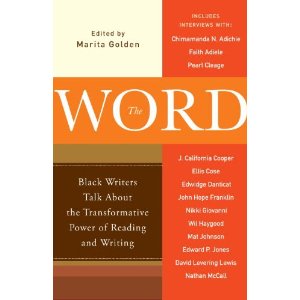
THE WORD: Black Writers Talk About the Transformative Power of Reading and Writing 

(Broadway Paperbacks Original, on sale January 18, 2011)


What inspired you to choose to focus this book on the power of reading and writing?

 There has been so much public and contentious debate and discussion about the skills of young people, the failure of public schools, and the future of reading and the book swirling around us. I had not seen much from Black writers on this topic, so I wanted to provide our voices in the discussion.

 Why do you feel this is a topic particularly pertinent to the African-American community?

African Americans have been so important to the vitality of American literature—historically and contemporaneously—that these are issues that are very important in our community. It’s also pertinent because a disproportionate number of Black youth attend schools where they do not succeed academically so these questions resonate in the Black community.

What was your process to determine which writers you wanted to interview? 

 I wanted to interview a diverse group of writers; writers who are celebrated in the way that Nikki Giovanni is, as well as new voices like Mat Johnson, as well as scholars like David Levering Lewis and biographers like Wil Haygood.

You interview so many amazing black writers—Edwidge Danticat, Pearl Cleage, Ellis Cose just to name a few. What were you most struck by in these interviews? Did you discover any common threads in their experiences with reading or were you surprised by the differences?

 I think the common thread for all of the authors interviewed in the book, including myself, is that reading became a safe and valued place for us as children where we discovered possibilities. Writing became a map we used to find our way and our dreams realized in the world.

 What were some of the most powerful examples of how reading and writing unlocked astounding possibilities for the authors you spoke with? How were their lives forever changed?

 In many ways the stories the writers share about the power of reading and writing in their lives is a story of how both acts became a bridge that they crossed into a wider world and a broader sense of themselves and what they could do. Edwidge Danticat grew up in a repressive society in Haiti and for her parents the act of writing was seen as very dangerous because of what writing could reveal. As a result, she never shared with her parents much of her writing so that they would not worry about her, and yet she has become the country’s most articulate literary spokesperson. Writing gave her courage and a way to speak loudly in the world. She has said that writing is the way that we leave our footmark in the world.

Edward P. Jones was encouraged by his illiterate mother and by caring teachers in high school to read and write. Both endeavors gave him a way to honor the difficult experiences of his childhood and the tragedy that was so much a part of his mother’s life because of the limitations imposed on her because she could not read and write. He grew up to be a writer of international acclaim, so once again reading and writing were empowering tools.

 With literacy rates—especially among young African Americans—on the decline, how do you feel THE WORD contributes to the conversation? Do you hope to foster discussion around this issue with the book?

Yes, I hope the book will be read by all students and will serve as an inspiration for them to read more. I’d like to see the book used and discussed in all schools, not just inner city schools. Certainly these acclaimed writers have much to say to youth about the importance and role of reading and writing as an engine for creating a successful life. Even in the Facebook age, the world is still governed and created by those who master literacy and language. Students could research the authors in the book as a way of discovering their lives and their blueprints for success.

To schedule an interview with Marita Golden, please contact Justina Batchelor, 212-572-2247 or jbatchelor@randomhouse.com .

The Last Word On………

The Movement and/versus Obama. I agree with Mary Frances Berry here; the Movement will return the day after Obama leaves office.

******************************

What can I say? This and this took care of it for me.

*******************************************

If making $400,000 a day is the end product of a cursed production and a train-wreck-in-the-making, I want to produce one! LOL! 🙂

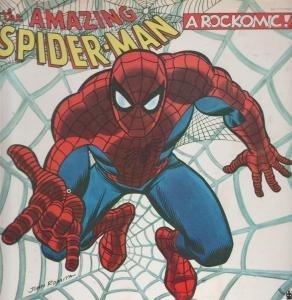
(By the way, here is the “Spider-Man musical” from my childhood. Ah, the early 1970s…. You opened up the LP and followed the story with comicbook images.)

*******************************************

Really enjoyed this film. Some critics dogged it for being too traditional, but as someone who grew up with old-timey 1950s and 1960s adventure films, what’s wrong with a film in that spirit? Too bad the remaining books in the series don’t deal with the main cast, so between that and the weak box office, I guess that’s it.

****************************************************

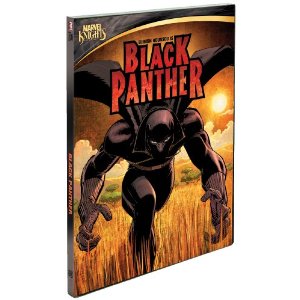
For fans only.

***************************************************

Well, she only owns half, but when you don’t have to put up the money……  🙂 And I guess this had to be said. But I think that in the 21st century, we can be sophisticated enough to thank Oprah for her consistent (albeit often-controversial) contributions to Black CULTURE, and separate that from the products she produces for her audience, i.e., white women. Oprah has never been committed to Black MEDIA, and 25 years is a long time to complain about that.