Author Archives: drumsintheglobalvillage
Obama On Trayvon Martin
Comicbook Review: "Dominique Laveau: Voodoo Child," No. 1
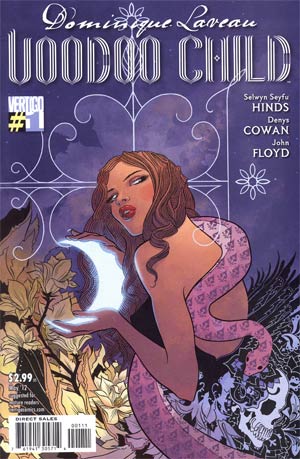
Dominique Laveau: Voodoo Child, No. 1
Selwyn Seyfu Hinds, Denys Cowan and John Floyd.
Vertigo.
32 pp. $2.99.
Thriller and chiller. “Requiem, Chapter One: Deep, Dark, Brown” is the title of the first issue of this new Vertigo series. The heroine is learned about literally on the run. By the end, she is profiled while she is profiled. Louisiana is the setting, a place that always had some type of zombies and ghosts roaming somewhere in the swamps of the nation’s imagination.
The tension between the swift action and the slow narration works. Hinds perhaps tries too hard to set the tone, but his attempt at prose poetry works as well as Cowan’s strong-as-ever style. Hinds, given his own “On The Ledge” column, Vertigo’s text spotlight, discusses his attempt: “For DOMINIQUE LAVEAU: VOODOO CHILD to truly come alive, I had to soak the series in that [New Orleans swinging] reality. I wanted to find a narrative style that captured the thematic richness of New Orleans music, the pain and the joy, as well as the structural aspects of the town’s songwriting, particularly with regard to jazz—the steady reprise of a verse structure, the improvisionational flights of a solo.” Yes, appreciated, but less is more in comics (and perhaps jazz, too).
But alive it is, and moving fast. The past is rising up out of the fresh mud of post-Katrina New Awlins, dirty and revealing. Self-discovery carries its own terrors and, in fiction, spilled blood always seems to follow. This first issue does a good job of setting up the pieces in ways that feel real.
The Crime That Must Be Punished
The More I Read About It…….
…..the more ready I am for “Hunger Games!”
I hope this fills the “Harry Potter” void, ’cause “Twilight” is not good enough methadone. 🙂
The Last Word On…………
Jason Russell nu dans la rue (Kony 2012) by Spi0n
………The White Savior? How about this? Sad. Physician, please heal thyself.
*********************
…..Juan Gonzalez’s great scoop! He’ll get the Pulitizer for this one, since he was robbed for his 911 stories, rewritten here.
********************
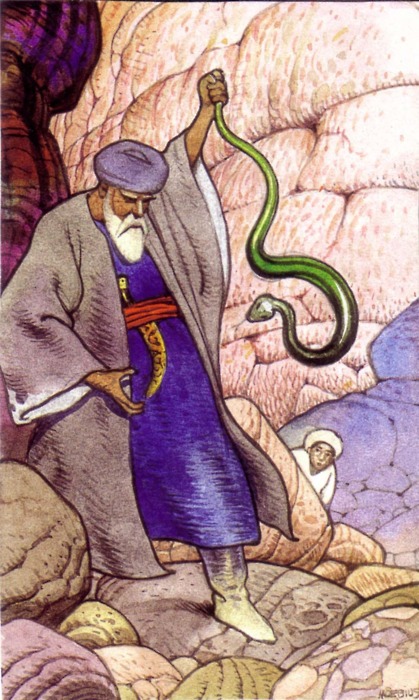

………..Mobeius, the illustrator of two of my favorite fantasy books. THANK YOU.
Book Reviews: Cracks and Currents In The Obama Era
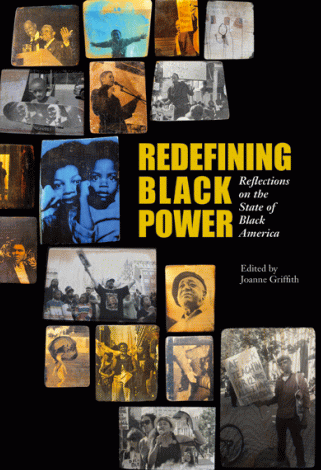
Redefining Black Power: Reflections on the State of Black America.
Edited by Joanne Griffith.
City Lights Books.
207 pp. $16.95.
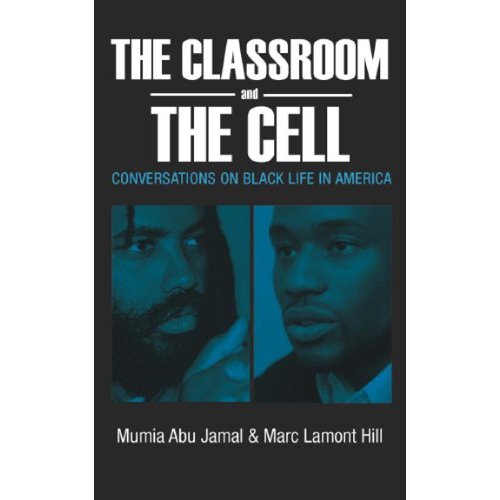
The Classroom and The Cell: Conversations on Black Life in America.
Mumia Abu-Jamal and Marc Lamont Hill.
Third World Press.
177 pp. $14.95.
Three years in, and the major accomplishment of the Age of Obama is to create new topics—and new schisms—among the Black progressive Left. In the G.W. Bush era, Tavis Smiley and Tom Joyner were still blood brothers, Rev. Al Sharpton had no problem marching on what was unambiguously a White House, and Black activists of all stripes, Elders to hiphop heads, had national conventions to talk about the Black Agenda. That old newsreel was right: time does indeed march on—but as a lot of Nationalists used to say, all change is not progress.
The questions continue: How hard should they/we be on Obama? Is he relevant, and if so, how?
These two current-event books are not just about Obama; in fact, the second only has one chapter devoted to him. But in this election year, these new discussions have to be viewed through the largest mirror in the room. The term discussion is used because these are Black public documents—Black controlled, edited and oriented “public media,” so to speak. Both of these discussions would have been better, with more current charging through them, as substantive articles in national Black magazines. But Quickie Q+A is a book format more and more Black writers are choosing, because, lacking an African-centered “Charlie Rose”-type of nightly program, it has more permanence in the 140-character universe.
Griffith plays the skeptic, asking her guests about responsibility, but she’s clearly leading the witnesses—which include Michelle Alexander, Ramona Africa, Vincent Harding, Linn Washington Jr., Julianne Malveaux and other current African-American luminaries—to where she (and ultimately, they) wants to go: to the idea that it is up to us, not him, to change the current state of Black America. (Alexander’s chapter is particularly illuminating, because it becomes clear that she a worthy successor—and soon peer!—to Ancestor Derrick Bell.) To the questioner Griffith, this book is just the middle of a long-ranging discussion that will continue as long as Obama is in office. The interviewees range from those who think he’s co-opted to those who think he’s handcuffed by what Martin Luther King called the triple evils of racism, militarism and economic exploitation. Including a harsh critic of Obama like, say, Glen Ford of Black Agenda Report (mentioned by two interviewees!) would have made this a much better book; then the discussion would have been expanded to Obama’s policies. (Disclaimer: this writer has contributed to Black Agenda Report.) So the range of dialogue stays in the realm of critically optimistic.
Ironically, Mumia Abu-Jamal and Marc Lamont Hill have a more nuanced and critical discussion in their one, straightforward Obama chapter. As Abu-Jamal tells Hill: “We can claim Obama, but that don’t make us his. You can claim him, but it ain’t like he claiming you.” Hill’s directness matches Abu-Jamal’s: Talking about the imperialist philosophy Obama has embraced, the Black public intellectual and television host exclaims: “He’s doing the best possible rendition of a White president, and can’t even get credit for it!” He points out that Blacks defending Obama “is a vote against White supremacy,” but it’s ultimately a vote for a Black president who defends white power. Abu-Jamal doesn’t disagree.
These books, separately and especially together, successfully ground Black America with some facts and perspectives as 34 million descendants of slaves continue to argue on the way to the voting booth this November. (Reading these two books, one after the other, made me long for Smiley’s “State of the Black Union” discussions during African Heritage Month.) But eventually, either next January or January 2017, the Age of Obama will be over, and Black Leftist activists will again feel comfortable enough to retrieve their dashikis and book major halls for national Black political conventions. Will the recent taste of power leave a sour residual in their mouths, or will they realize they had no real power at all? Time will tweet as it marches.
Coming Soon: "A Lie Of Reinvention: Correcting Manning Marable's Malcolm X"
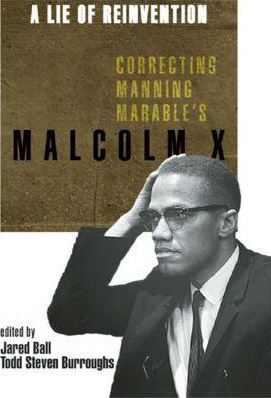
Coming in May.
From the Coda:
We are publicly arguing about a book because it was a book, The Autobiography of Malcolm X, that intellectually birthed so many Black people in the first place. The Autobiography allowed Malcolm to enter our minds, where he witnessed our rebirths. For many of us, he is still there, advising ever since like some sort of Race Man sensei. As for Manning Marable, his legacy is what it is and will and should be, for good and ill, like every other human on Planet Earth. But, speaking just for myself now, history is more important to me than either any biographer or any biographical subject. (And that includes El-Hajj Malik.) My issue is that this biographical subject deserved a much more thoroughly researched work. Ultimately, the book that Marable wrote can only be countered by another, more definitive book. And so, we humbly offer this book as a collection of notes for that future biography.
This book is strongly critical. Good. Harsh public criticism is the appropriate response to harsh public actions, harsh public cultural distortions and harsh public accommodations to the first two. It is also necessary when there are too many, for whatever reason, which refuse to separate critique from tribute. We are unapologetic in our tone because in wasting this grand opportunity, we believe that Manning Marable, our new Ancestor, owes us an apology. And yes, part of this criticism is personal because he personally made decisions, virtually on his own, that produced poor history—one now absorbed by an anti-intellectual popular culture—about a world-historical figure. And that, too, we believe is a reality that should be publicly stated. And as far as speaking ill of the dead is concerned, William Strickland, one of our contributors, reminds us that that idea was “a standard Manning did not adhere to himself.” But even if he did, that would be irrelevant to us.
Manning Marable doesn’t need our tribute; others will take care of that. (While this chapter was being written, Columbia University and the Schomburg were moving forward with a Manning Marable Memorial Conference, scheduled for April 2012.) The issue for us is preserving accurate historical memory, and it must be preserved in concrete word and in strong deed. Preserving memory is more important than preserving some sort of intellectual operational unity in deference to Manning Marable’s long history or trying to figure out a way to use, to salvage, what he did with “Reinvention” for the larger Movement. Manning Marable should be remembered—for all his contributions. (And the quality of those contributions are, and will continue to be, argued and debated.) But most of us in this volume, addressing the Malcolm biography and its writer directly—as writers, as part of this tradition of Afro-American critical thought—didn’t go to high school or college with Marable or with his children. We haven’t been taught by him or lectured under him at Columbia. We don’t owe Manning Marable any money. We owe history. We owe Africana Studies. Our larger commitment to historical memory dwarf any concerns about offending Manning Marable’s admirers, colleagues, friends and students. History is our prime concern, and we actively choose not to make shinola or its counterpart out of it.
Asante Sana, U.S. Rep. Donald Payne (D-N.J.)
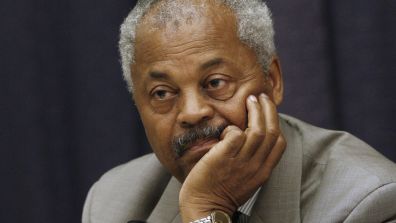
I enjoyed covering you a long, long time ago. I was always a bit confused while doing it, because you weren’t charismatic, didn’t have a huge ego and did a lot of work on African issues. Unusual.
March 15th UPDATE:
 Drums in the Global Village